When you run a local business, you aren't trying to win over the whole world—you just want to win over your neighborhood. If you are a plumber, a roofer, or a shop owner, you want to show up when someone nearby types "best plumber near me" into their phone.
This is called Local SEO."SEO" stands for Search Engine Optimization, which is just a fancy way of saying "fixing your website and online info so Google likes you."
The good news? You don't need to be a computer genius to do this yourself. You just need the right tools. Here is the best software to help you DIY your local SEO and get more people calling your business.
1. Google Business Profile (GBP)
The Must-Have Tool
If you only do one thing on this list, do this. Your Google Business Profile is the little box that shows up on the right side of the screen or in Google Maps when someone searches for your business.
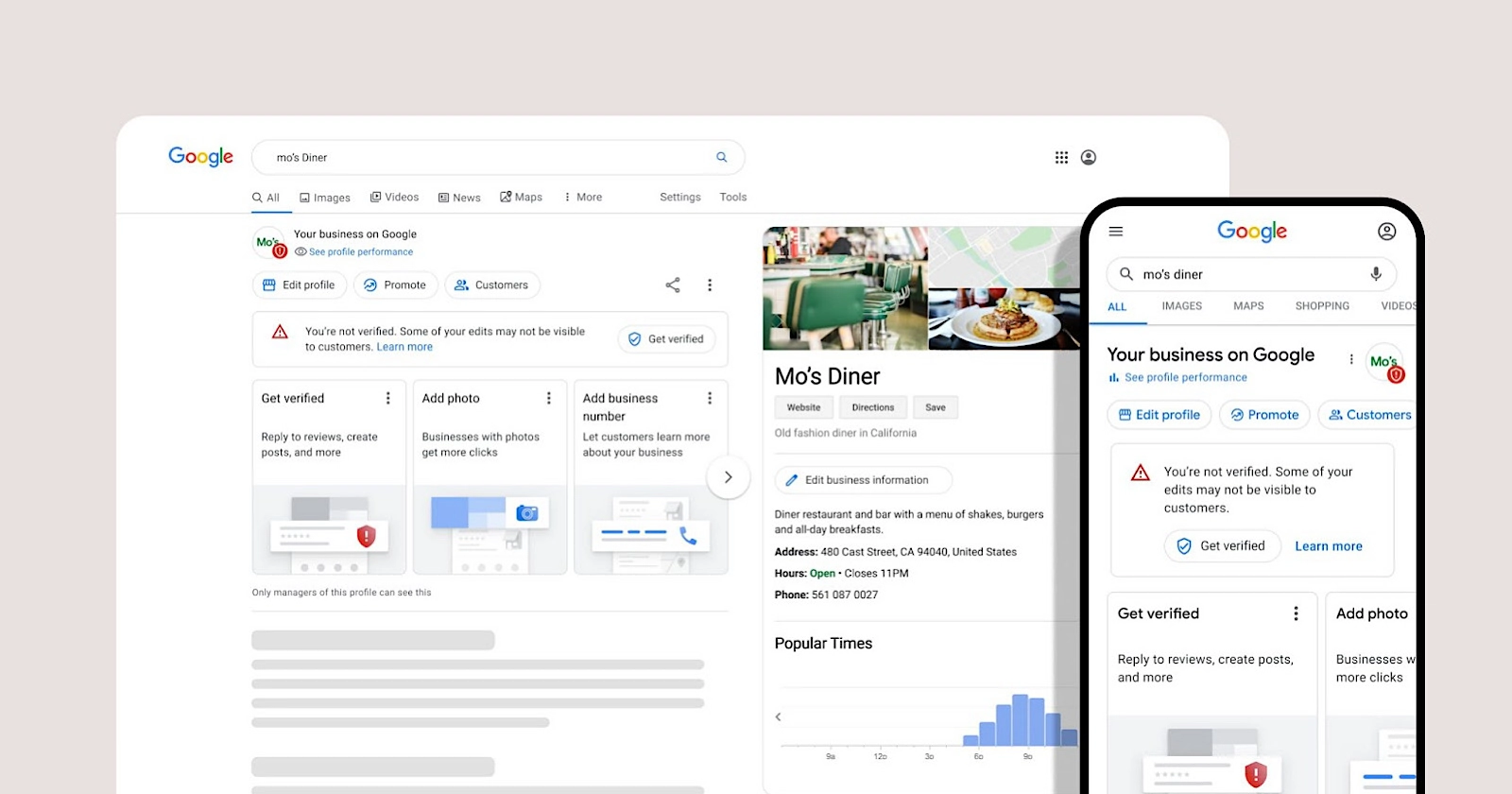
Why it matters: Google trusts its own tools more than anything else. Having a complete profile tells Google,"Hey, I'm a real business, and I'm open right now!"
How to use it like a pro:
- Keep Your Info Exact: Make sure your business name, address, and phone number (we call this NAP) are exactly the same here as they are on your website. Even a small change, like writing "St." instead of "Street," can confuse Google.
- Add Photos Weekly: Google loves fresh content. Take a picture of a finished job or your team at work and post it. It shows customers you are active.
- Answer Questions: There is a "Q&A" section. Don't wait for customers to ask things; you can post your own common questions (like "Do you offer emergency services?") and answer them yourself!
2. Google Analytics (GA4)
The "Brain" of Your Website
Google Analytics is a free tool that tracks what people do when they visit your website. It's like having a security camera for your digital store.
Why it matters: You need to know if your SEO is actually working. Google Analytics helps you figure out traffic (how many people visited) and conversions (how many of those people actually called you or filled out a form).
Why "Dwell Time" is important:
Google watches how long people stay on your site. This is called "dwell time." If someone clicks your link and leaves immediately, Google thinks your site is bad. If they stay for five minutes, Google thinks your site is great and will move you higher in the search results.
3. BrightLocal
The Secret Weapon for Local Dominance
While the first two tools are free, BrightLocal is a paid tool built specifically for local businesses. It handles the "boring" stuff that makes a huge difference.
Reputation Management
This is a fancy term for Reviews. BrightLocal helps you send automated texts or emails to customers asking for a review. Reviews are like "votes" for your business. The more 5-star votes you have, the more Google trusts you.
Citations
A citation is just any place on the internet that mentions your name, address, and phone number. Think of sites like Yelp, Yellow Pages, or your local Chamber of Commerce.
Why they matter: If Google sees your business mentioned in 50 different trusted places, it feels confident that you are a real, legitimate business. BrightLocal finds where you are missing and helps you get listed there.
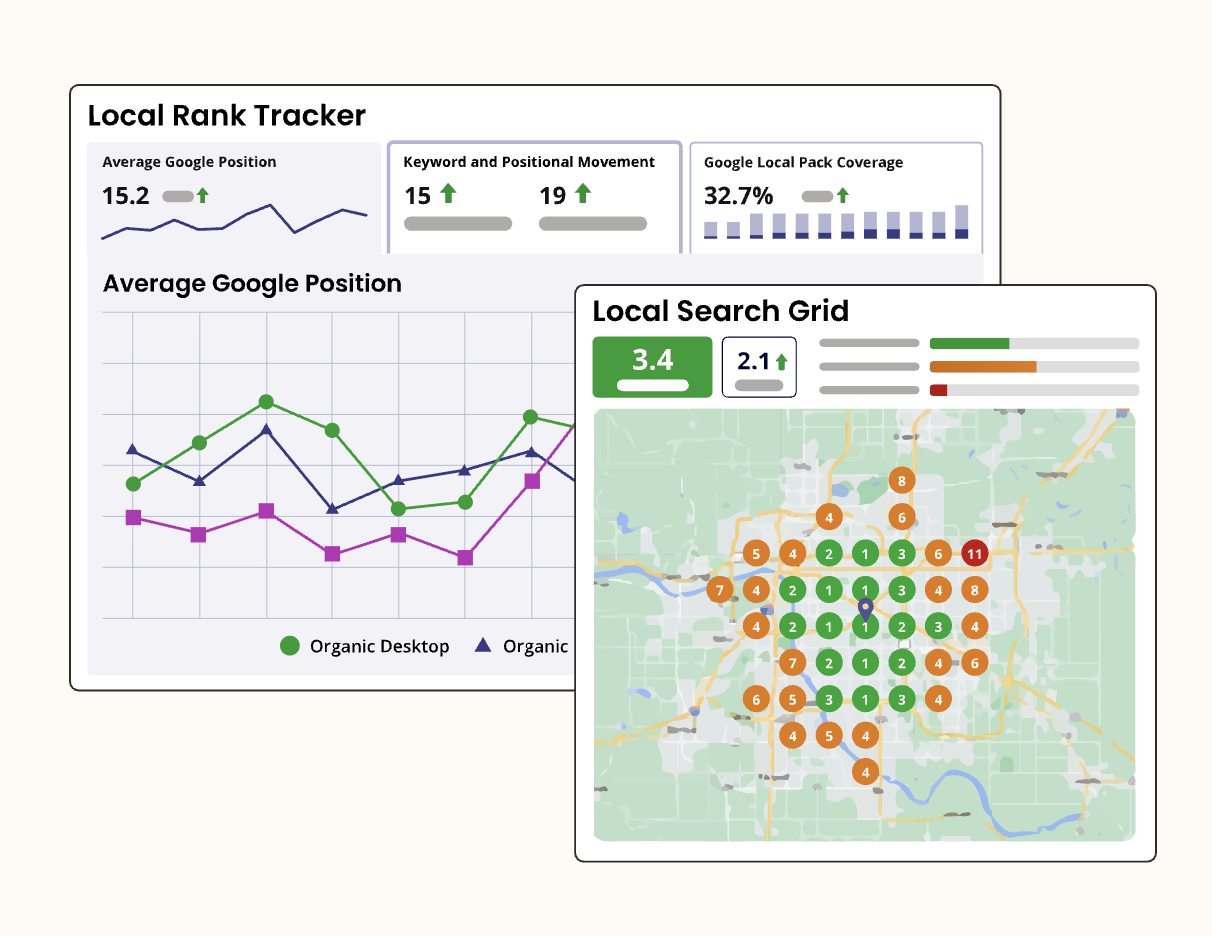
Local Search Grid
Traditional SEO tools give you one "rank" (like "You are #3 in Chicago"). But local SEO is different. You might be #1 when someone stands next to your office, but #10 when they are three miles away.
BrightLocal's Grid shows you a map with colored dots. Green dots mean you are winning in that specific neighborhood; red dots mean you need to do more work there. It helps you "dominate" your entire service area, street by street.
4. Ahrefs
The Deep-Dive Tool for Growing Fast
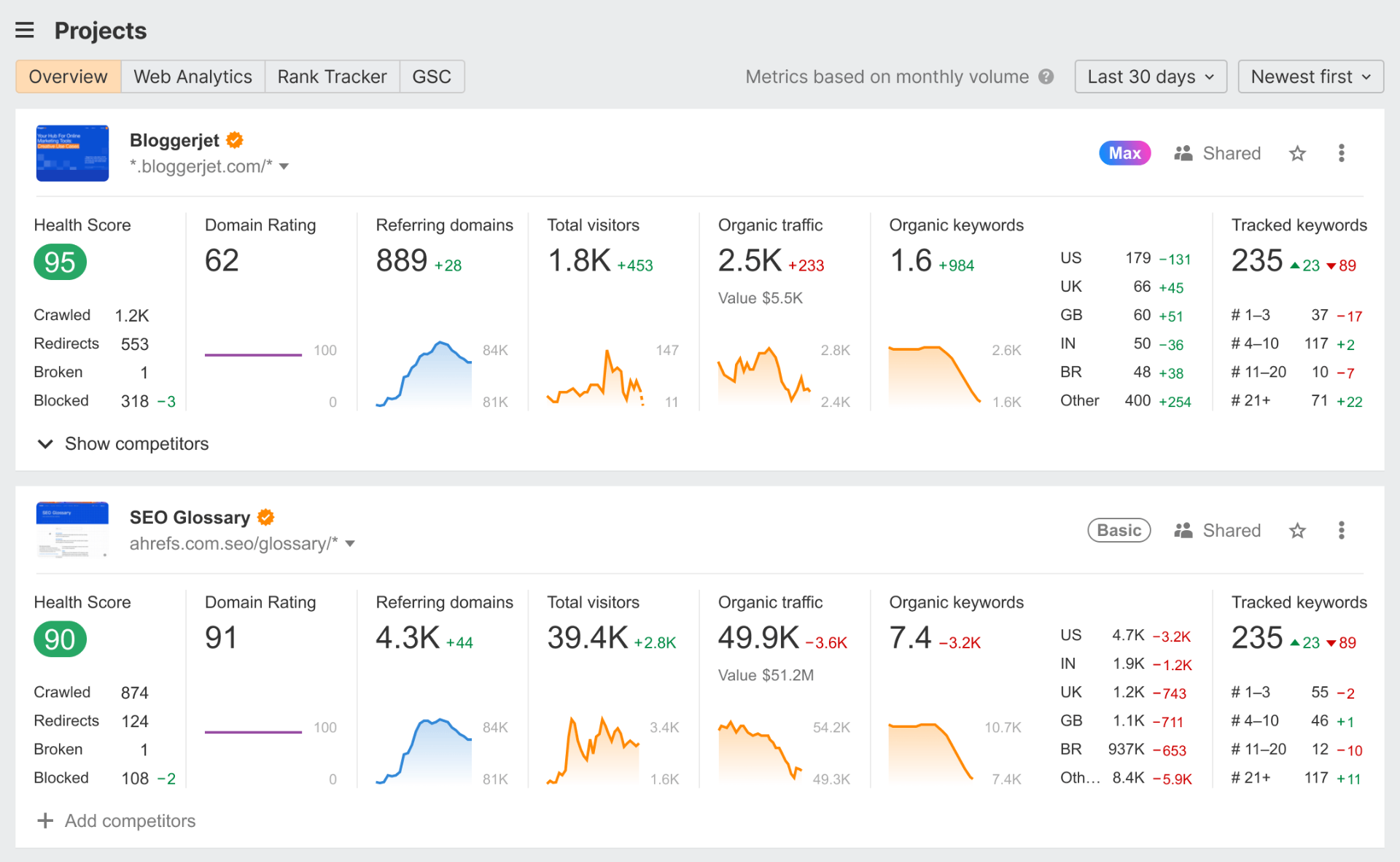
Ahrefs is a very powerful tool. It's a bit more "techy," but it's amazing for Keyword Research and Competitive Research.
Keyword Research
A"keyword" is what people type into Google. For example,"Roof repair" and "Leaky roof help" are different keywords. Ahrefs tells you which words people use the most so you can use those exact words on your website.
Competitive Research
This is the "spy" mode. You can put your competitor's website into Ahrefs and see:
- Which words are bringing them the most customers.
- Which other websites are linking to them (Backlinks).
- Where they are weak so you can be better.
5. RoofMammoth.ai
The Lead Magnet (Better Conversions)
Strictly speaking, this isn't an "SEO tool," but it helps your SEO in a sneaky way. A Lead Magnet is something free you give to a visitor in exchange for their contact info.
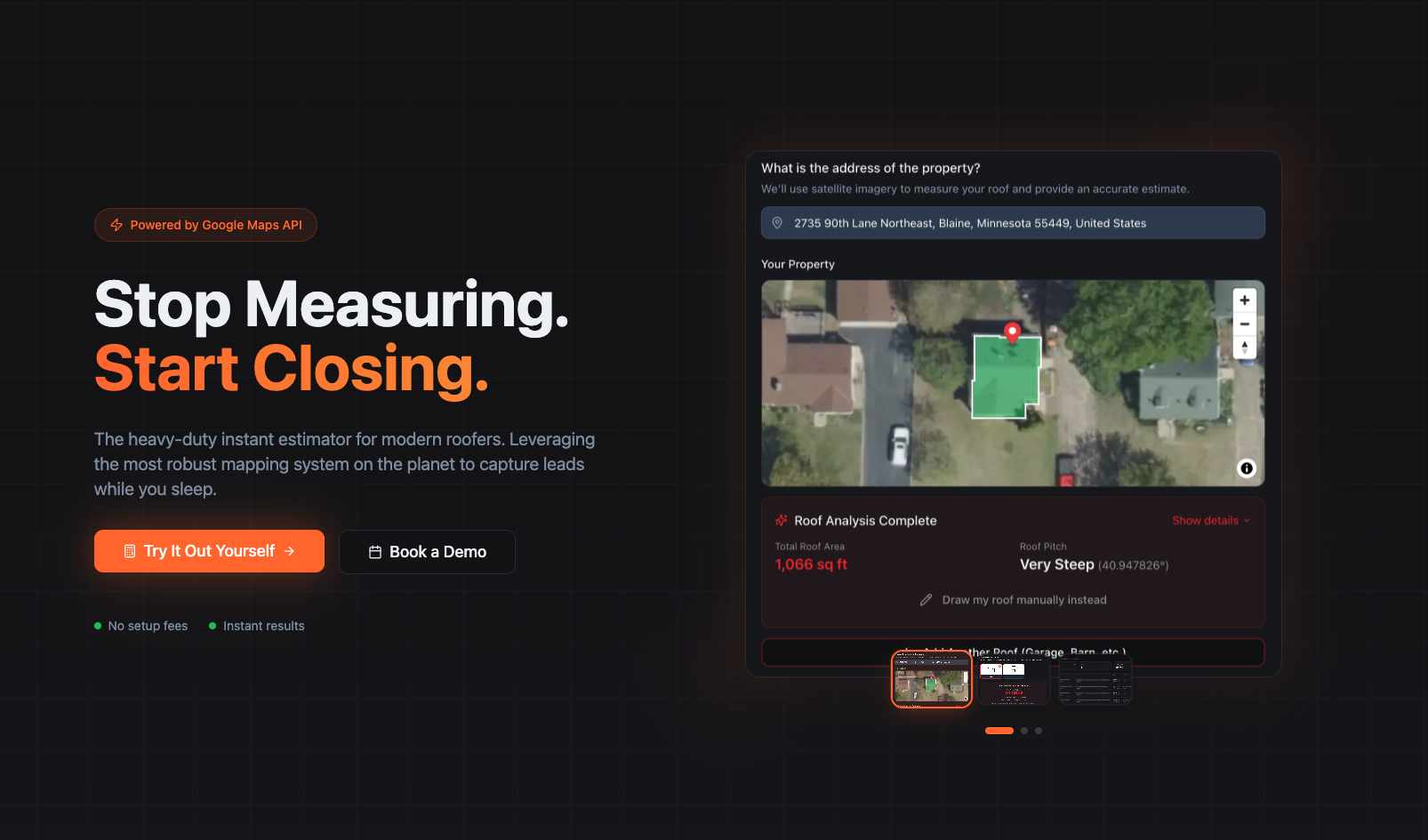
For roofers, RoofMammoth.ai lets visitors get an instant roofing quote right on your site.
Why this helps SEO:
- Increases Dwell Time: People spend a few minutes clicking through the tool to get their quote. As we mentioned, longer dwell time tells Google your site is valuable.
- Higher Conversions: Instead of a boring "Contact Us" page, you give them something they actually want. You get their phone number, and they get an answer immediately.
- Response Speed: The roofer gets the lead instantly, meaning you can call them while they are still thinking about their roof.
6. Make.com
The Automation Assistant
SEO can take up a lot of time. Make.com is a tool that connects your different apps so they talk to each other automatically.
Why it's useful for SEO:
You can set up "scenarios" (automatic tasks). For example:
- When you get a new 5-star review on Google, Make can automatically post a "Thank You" on your Facebook page.
- When someone fills out a form on your site, Make can instantly text you and add their info to a spreadsheet.
This keeps your business looking active and responsive without you having to spend all day on your computer.
Related reading: the contractor SEO playbook ties these DIY tactics into a full local strategy, and GEO vs SEO explains where AI Search fits alongside them.
Want to implement these strategies?
Book a free strategy call and learn how we can help grow your contractor business.
Book a Free Strategy Call