
TL;DR
Electrician leads are different from every other home service trade for two structural reasons: the EV charger boom is creating a brand-new high-AOV customer segment, and electrical work is uniquely safety-regulated (licensing trust signals carry more weight than in any other trade). Most electrician marketing programs ignore both dynamics and run the same generic SMB playbook every other contractor runs. They lose to electricians who deploy EV-charger-specific funnels, license-credentialed local SEO, and 24/7 emergency call infrastructure. This post ranks the 9 lead channels every electrician should know in 2026 with realistic cost-per-lead benchmarks and the starter stack we'd build for any 3-to-15 truck operation tomorrow.
If you'd rather skip the DIY route and work with an electrician marketing consultant who builds the system for you, book a free strategy call. We'll diagnose your specific bottleneck on the call.
Why electrician leads are different from every other home service trade
The EV charger boom is creating a brand-new customer segment. Residential EV adoption is one of the fastest-growing consumer categories in the US. Every EV buyer needs an installed home charger, and 30 to 40% of those installs require panel upgrades. A single EV charger install ($800 to $2,500) often becomes an EV charger + panel upgrade combo ($3,500 to $7,000+). The electricians who capture this combo are the ones with dedicated EV charger landing pages, utility rebate integration, and federal tax credit education content.
Electrical work is the most safety-regulated trade. State licenses, bonding, insurance, jurisdiction-specific credentials, NEC code compliance, AFCI/GFCI requirements. Homeowners check for these signals before they hire. Trust architecture matters more in electrical marketing than in any other trade. Contractors who surface their credentials prominently close at 25 to 40% higher rates.
Emergency power-out calls are life-safety events. A panel down or exposed wiring at 11pm is dangerous. The electricians who win the emergency call market have AI receptionist infrastructure that answers every call within seconds.
The 9 electrician lead channels ranked by ROI
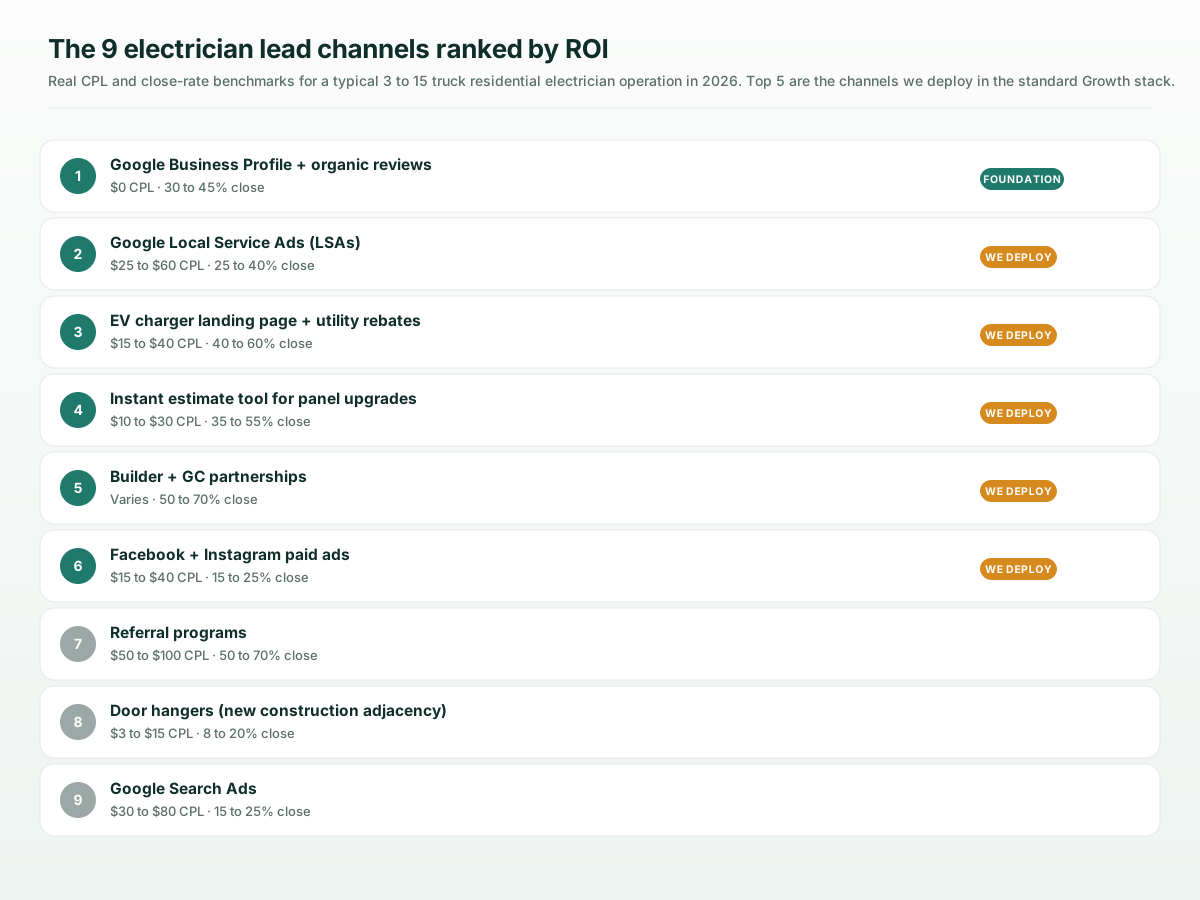 Caption: Real cost-per-lead and close-rate benchmarks for the typical 3 to 15 truck residential electrician operation in 2026. The top 5 are the channels we deploy in the standard Skill Mammoth Growth stack.
1. Google Business Profile + organic reviews
GBP is the #1 organic local-search asset. Operators with 50+ recent positive reviews, optimized listing, and verified service area dominate the map pack.
Cost-per-lead: Effectively $0 in direct ad spend.
Close rate: 30 to 45%.
Why it wins: Highest-trust signal. Compounds permanently.
2. Google Local Service Ads (LSAs)
Google-verified pay-per-lead ads with the "Google Verified" badge. For electricians, LSAs typically cost $25 to $60 per lead, reflecting the rigorous verification process for safety-regulated trades.
Cost-per-lead: $25 to $60.
Close rate: 25 to 40%.
Why it wins: Top-of-page visibility, Google-Guaranteed trust badge especially meaningful in safety-regulated trades.
3. Dedicated EV charger landing page + utility rebate integration
The single biggest growth opportunity in residential electrical work. Dedicated landing page covering install process, typical cost, federal tax credit (30% up to $1,000), local utility rebate programs, hardware recommendations, and instant estimate widget. Pair with Google Ads bidding on "EV charger installation [city]" and "Tesla wall connector installer near me."
Cost-per-lead: $15 to $40 (lower than generic CPL because intent is so specific).
Close rate: 40 to 60% (buyer is highly committed).
Why it wins: Highest-AOV residential install category. 30 to 40% become EV + panel upgrade combos worth $3,500 to $7,000+.
4. Instant estimate tool for panel upgrades
Most electricians make homeowners wait 24 to 72 hours for a panel upgrade quote. Instant estimate widget gives a ballpark range immediately based on current panel size and target amperage. Converts at 2 to 4x the rate of generic forms.
Cost-per-lead: $10 to $30 from existing organic traffic.
Close rate: 35 to 55%.
Why it wins: Captures buyer at peak intent. Reduces sales cycle from days to minutes.
5. Builder + general contractor partnerships
New construction and renovation projects need electrical work. Contracts go through builders and GCs more often than direct homeowner shopping. 5 to 15 active builder relationships can produce steady high-AOV new-construction work without consumer-facing ad spend.
Cost-per-lead: Variable, mostly time investment. 3 to 6 months to first contract per builder.
Close rate: 50 to 70%.
Why it wins: Highest-AOV electrical contracts. Compounds.
6. Facebook + Instagram paid ads (visual: panel rebuilds, EV charger installs)
Electrician work has strong visual content (a clean panel rebuild, EV charger install in a tidy garage). Before/after photos, time-lapse video, "what bad wiring looks like" educational content perform well. Geo-targeted to service area, paired with EV charger or panel upgrade landing pages.
Cost-per-lead: $15 to $40 with good visual creative.
Close rate: 15 to 25% (cold traffic).
Why it wins: Scales easily, captures homeowners who weren't actively searching.
7. Referral programs
Electrical work is referral-driven because the safety stakes are high. Homeowners ask their neighbors who did the panel work. Structured referral programs ($50 off + $50 to friend) with automated follow-up drive meaningful new-customer volume.
Cost-per-lead: $50 to $100 per referred customer.
Close rate: 50 to 70%.
Why it wins: Highest-trust signal. Referred customers churn less.
8. Door hangers on newly-constructed neighborhoods (EV charger upsell)
Underrated in 2026 specifically for EV charger work. Newly-built homes have new panels but rarely have EV chargers pre-installed. Door hangers in new-construction neighborhoods in EV-adopting metros produce high-quality EV charger leads at low CPL.
Cost-per-lead: $3 to $15 per qualified lead when targeted.
Close rate: 8 to 20%.
Why it wins: Geographic precision. Captures EV-charger upsell intent before homeowners have shopped competitors.
9. Google Search Ads (paid search for specific install categories)
Traditional Google Ads for "panel upgrade [city]", "EV charger installation [city]", "whole home generator [city]", "emergency electrician [city]". Higher CPL than LSAs but allows granular keyword targeting.
Cost-per-lead: $30 to $80 per lead.
Close rate: 15 to 25%.
Why it wins: Granular control over which queries you bid on.
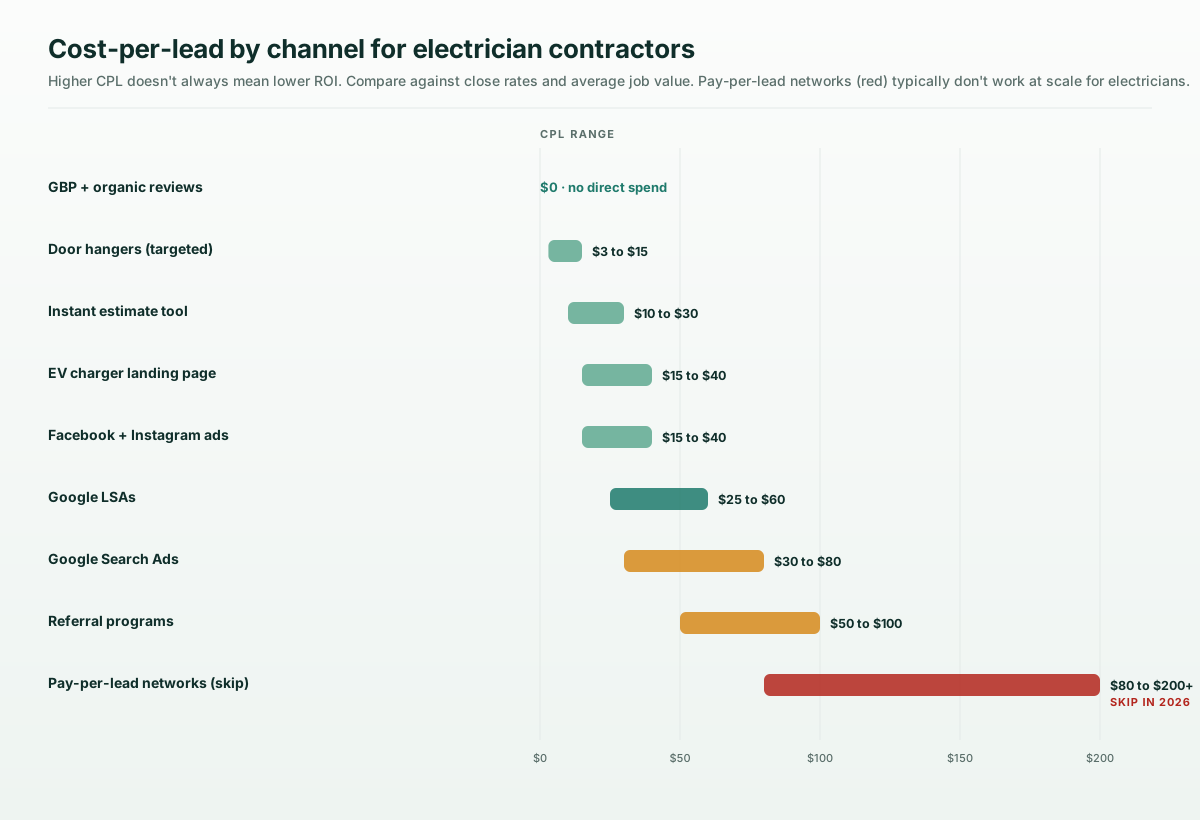 Caption: Higher CPL doesn't mean lower ROI. Compare against close rates and average job value before reallocating budget. Pay-per-lead networks (shown in red) typically don't work at scale for electricians.
What we'd skip in 2026
- Pay-per-lead networks (HomeAdvisor, Angi, Networx). Shared leads, 4 to 8% close rates, high per-customer cost.
- Print advertising and direct mail blasts. Geographic targeting too imprecise.
- TV and radio for sub-10-truck operations. Reach too broad.
- Yelp paid advertising. Lower-intent traffic than Google for electrical work.
The starter stack we'd deploy for a 3-to-15 truck electrician operation today
- Custom website with instant estimate tools for major install categories. See our electrician website design guide.
- GBP optimization + automated review collection. Free, compounds permanently.
- Dedicated EV charger landing page with utility rebate + federal tax credit content.
- Google Local Service Ads. Top-of-page visibility, Google-Guaranteed badge.
- AI chatbot + speed-to-lead automation for emergency call capture.
- Facebook/Instagram ads with visual creative.
- Builder partnership program. Layered on as the operation matures.
Total monthly investment for a 5-truck operator: $2,500 to $5,000/month in ad spend + $350 to $1,500/month in marketing support + one-time $1,000 to $3,000 website build (financeable as Easy Start at $150/mo for 24 months). See pricing or website cost calculator.
What to do this week
- Audit your current EV charger page. Federal tax credit and local utility rebate programs covered? If not, you're missing the biggest growth opportunity.
- Audit your Google Business Profile. 30+ recent reviews?
- Sign up for Google Local Service Ads.
- Pick ONE underused channel to test this quarter (most electricians, the EV charger funnel).
- Read our electrician website design guide or electrician practice page.
- Or book a 30-minute strategy call.
FAQ
What's the single highest-ROI lead channel for an electrician?
For most operators in EV-adopting metros, it's the EV charger funnel paired with GBP optimization. The EV charger landing page captures the highest-growth residential install category. GBP drives the highest-trust local search traffic.
How many leads do I need per month?
A 5-truck electrician operation typically needs 40 to 80 qualified leads per month, factoring in a 25 to 35% close rate and the mix of high-AOV installs vs lower-ticket service work.
Can I outsource lead generation entirely to an agency?
Yes, but the tracking stays yours. The agency runs the marketing; you own the call tracking, the CRM, and the attribution dashboard.
How long until I see results from a new lead-gen system?
LSAs and EV charger paid search produce leads within days. Instant estimate tool deployment produces measurable conversion lift within 30 days. GBP optimization compounds over 60 to 90 days. Builder partnership program takes 3 to 6 months to mature.
Should I include small repair jobs in my lead metrics?
Track them separately. Small repair leads have lower AOV ($150 to $400) vs high-AOV install leads ($800 to $7,000+). Mixing hides the patterns.
What about HomeAdvisor or Angi for electrician work?
Pay-per-lead networks typically don't work well at scale. Leads are shared with 3 to 5 competing electricians. Close rates are 4 to 8%. Use only to test a new market.
How does AI fit into electrician lead generation?
AI receptionist for 24/7 emergency power-out call capture. AI chatbot for instant triage on the website. AI-drafted GBP posts. AI-drafted post-job follow-up sequences for review collection and EV-charger upsell tracking.
What if I'm a 1-truck operator just starting?
Start with: GBP optimization, custom website with at least an EV charger page, automated review collection, and Google LSAs. Add Facebook ads and builder partnerships once you have monthly revenue stability.
Can you help me build out builder and GC partnerships?
Yes. Builder partnerships are some of the highest-AOV electrical work. We build the partner program infrastructure: co-marketing landing pages, automated referral tracking, monthly partner-performance reports.
What's the difference between residential and commercial electrical marketing?
Residential optimizes for homeowner shopping (Google, GBP, social, EV demand). Commercial optimizes for facility manager and property manager relationships (longer sales cycles, RFP processes). If you do both, you need two separate programs.
What about Google Local Service Ads?
Do them. Google Verified LSA management is the highest-ROI paid channel for residential electrical work today. Cost-per-lead usually lands $25 to $80 in major metros, the Google Verified badge lifts close rate, and spend attaches to verified leads instead of clicks. Set them up before you spend another dollar on traditional PPC. Full walkthrough in our Google Verified for contractors guide.
Related reading: our electrician SEO playbook is the long-form ranking strategy that turns these lead tactics into compounding traffic, and the full promotion stack lives in our electrician marketing guide.
Want to implement these strategies?
Book a free strategy call and learn how we can help grow your contractor business.
Book a Free Strategy Call