
TL;DR
Most plumbing contractors think "AI for plumbers" means a chatbot that says hi. That is the wrong starting point. The high-ROI AI deployments for plumbing in 2026 are about capturing emergency calls that would have gone to voicemail (water emergencies do not wait for business hours), routing leads in seconds instead of hours, and automating the post-job follow-up that drives maintenance memberships. This post ranks the 11 AI use cases for plumbing contractors by actual ROI, calls out which ones SkillMammoth deploys directly, and shows the starter stack we would build for any 3-truck-or-bigger plumbing operation tomorrow.
If you would rather skip the DIY route and have us deploy this for you, book a free strategy call. We will show you the exact stack on the call.
Why AI matters for plumbing contractors specifically
Plumbing is more vulnerable to "missed lead" loss than almost any other home service trade. Three factors compound:
Water emergencies do not wait for business hours. A burst pipe at 11pm is a property-damage emergency that compounds every minute. The homeowner is dialing the first three plumbers Google shows them, and they will book whoever picks up first. If your office is closed and your after-hours rollover goes to voicemail, you do not lose the lead. You lose the customer (because the plumber they called first is now their plumber, forever).
The intake window is brutal. Roofing decisions take weeks. HVAC replacements take days. Plumbing emergencies take minutes. The homeowner with water in their basement is not comparing 3 quotes. They are picking the first qualified plumber they can reach.
Multi-trade buyers are interruptible. Plumbing customers also need water heaters, water filtration, drain cleaning, sewer scoping, and (often) HVAC. The plumber who answers first and books the emergency captures the lifetime revenue of a multi-service household. The plumber who does not answer loses all of it.
This is what AI changes. Not because AI is magic. Because AI lets you answer at 11pm without staffing a 24/7 dispatch desk.
The 11 AI use cases for plumbers, ranked by ROI
We ranked these by actual return on investment for the typical 3-to-15 truck plumbing operation in 2026. The ones marked we deploy are part of the SkillMammoth standard build. The others you can DIY or hire out, but they are lower priority.
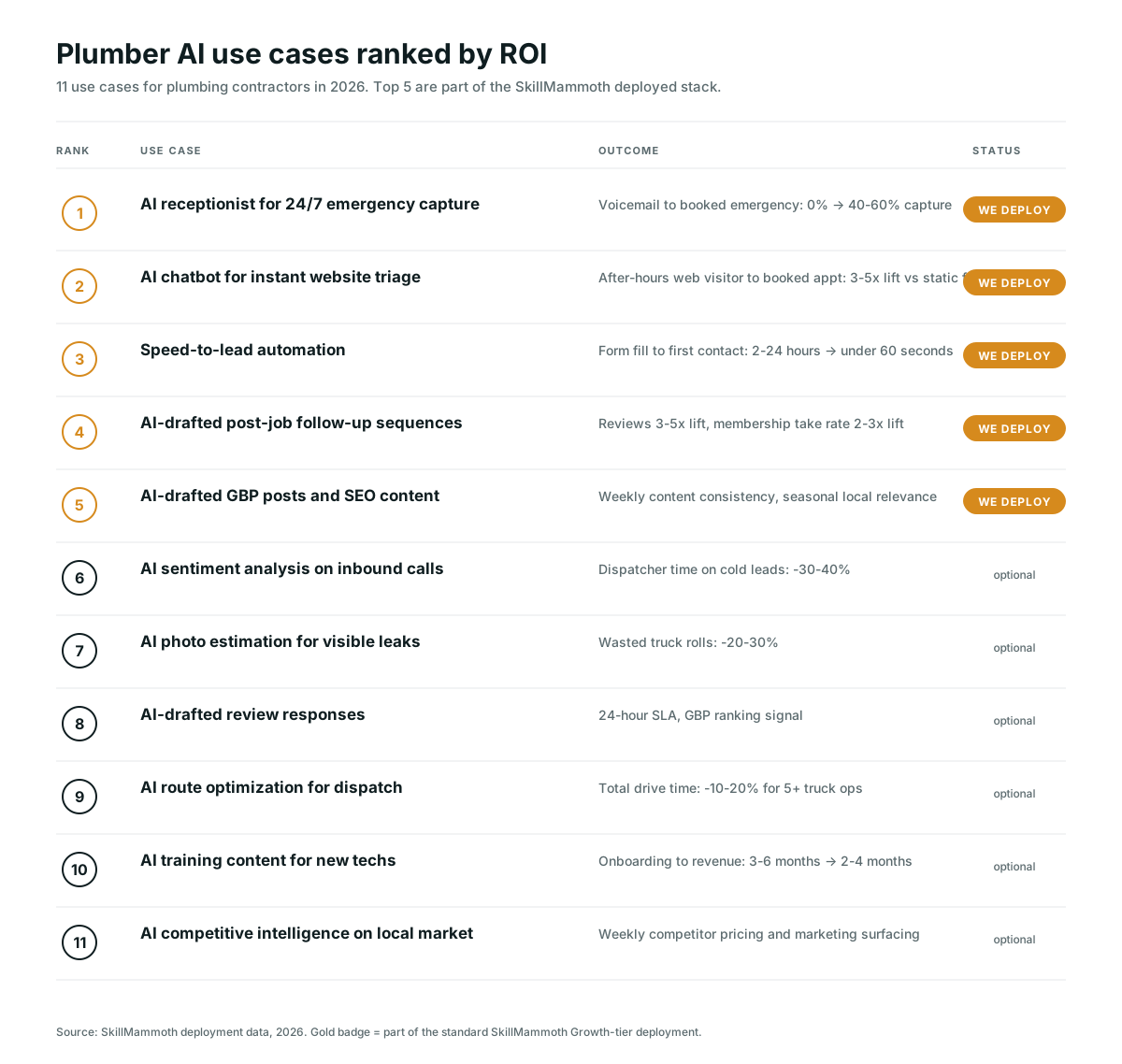 The 11 AI use cases that actually move the needle for plumbing contractors, ranked by 2026 ROI. The top 5 are deployable today and produce measurable lift inside 90 days. The bottom rows are emerging tech with longer payback timelines.
1. AI receptionist for 24/7 emergency capture (we deploy)
The single highest-ROI AI deployment for plumbing in 2026. AI receptionist answers every call when your dispatcher is on another line or your office is closed, qualifies the lead as emergency vs scheduled vs sales, books emergencies straight into your dispatch software, books scheduled work into your calendar, and routes hot leads to your on-call tech's phone within 60 seconds. Captures 40 to 60% of calls that previously went to voicemail and stayed there.
What we deploy: AI receptionist trained on your services, your pricing tiers, your emergency dispatch rules, and your tech availability. Integrated with Housecall Pro, ServiceTitan, Jobber, or FieldEdge directly.
2. AI chatbot for instant website triage (we deploy)
Homeowner lands on your website at 11pm with a leak. The chatbot greets them, asks 3 qualifying questions (what is leaking, where, how bad), books a morning emergency slot, captures the lead with full context, and texts your on-call tech the summary. The whole interaction takes 90 seconds and the homeowner sleeps knowing someone is coming.
What we deploy: Plumber-tuned chatbot with emergency triage workflows, pricing transparency on standard services, and direct CRM integration. Converts after-hours website visitors at 3 to 5x the rate of a static contact form.
3. Speed-to-lead automation (we deploy)
When a form is filled or a call lands, the system text-pages your on-call tech within 60 seconds. Industry data shows responding within 1 minute lifts conversion by 391%. Most plumbing contractors respond in 2 to 24 hours. We will not let that be you.
What we deploy: Speed-to-lead routing that text-pages, emails, and notifies via your FSM platform simultaneously, with auto-escalation if the first rep does not acknowledge within 5 minutes.
4. AI-drafted post-job follow-up sequences (we deploy)
Every completed job triggers a 5 to 7 touch automated sequence: same-day review request, 3-day satisfaction check-in, 14-day maintenance membership offer, 90-day seasonal reminder, 12-month annual service trigger. Each touch is AI-drafted to feel personal (referencing the actual job done, the tech who did it, the customer's specific situation).
What we deploy: Automated post-job sequences with AI-personalized copy, integrated to trigger from your FSM. Typical lift on review collection: 3 to 5x. Typical lift on maintenance membership take rate: 2 to 3x.
5. AI-drafted GBP posts and SEO content (we deploy)
Google Business Profile posts work best when they are consistent (weekly), seasonal (relevant to current customer concerns), and locally specific. AI drafts the weekly post calendar from your service categories, current season, and local market context. You approve, it publishes.
What we deploy: AI-drafted weekly GBP post calendar, plus seasonal blog content (winter pipe-freeze prep, summer water heater season, monsoon drain backup, etc.) keyed to your specific city.
6. AI sentiment analysis on inbound calls
CallRail and similar platforms can now transcribe every call and run sentiment analysis. The system flags hot leads (emergency, ready to book, high urgency) for immediate follow-up and deprioritizes cold inquiries. Your dispatch team focuses their time on the leads most likely to close.
ROI: Modest but real. Cuts dispatcher time on cold leads by 30 to 40%, frees them up for hot lead follow-up. Worth it for operations with 200+ inbound calls per month.
7. AI photo estimation for visible leaks and water damage
Homeowner snaps a photo of the leak, uploads via your website or text-back system, AI assesses the visible damage and gives a ballpark estimate range. Not a replacement for a real diagnostic visit, but enough to qualify the lead and set expectations before you roll a truck.
ROI: Cuts wasted truck rolls by 20 to 30%. Speeds up the first quote. Better fit for residential service work than commercial. Mature enough to deploy in 2026.
8. AI-drafted review responses
Every Google review (positive and negative) gets a thoughtful response within 24 hours. AI drafts personalized responses that address the specific situation in the review, you approve, it posts. Negative reviews especially benefit from a calm, specific, professional response that often de-escalates the situation and signals to other prospects that you handle issues well.
ROI: Modest but compound. Review response rate is a Google Business Profile ranking factor. Reviewed-and-responded businesses show meaningfully higher conversion on the GBP listing.
9. AI route optimization for dispatch
Multi-stop dispatch routing that minimizes drive time across your active job pool. Most modern FSM platforms (Housecall Pro, ServiceTitan) have basic optimization built in. Layering AI-powered route optimization on top can cut total drive time 10 to 20% for operations with 5+ trucks running 6+ jobs each per day.
ROI: Real for larger operations. Less impactful for 1-to-3 truck operators where manual dispatch works fine.
10. AI training content for new techs and apprentices
Onboarding a new plumber tech traditionally takes 3 to 6 months before they are solo-revenue-generating. AI-generated training content (video walkthroughs of common diagnostic flows, AI-graded knowledge checks, virtual ride-along scenarios) can compress that timeline meaningfully.
ROI: Long-payback but real. Worth it for operations actively hiring and onboarding 2+ techs per year.
11. AI competitive intelligence on local market
Track competitor pricing, marketing changes, GBP post cadence, review velocity, and ad spend in your specific market. AI surfaces patterns weekly so you stay ahead of pricing wars, marketing pivots, and reputation shifts.
ROI: Modest, mostly strategic. Useful for owner-operators who want to stay close to the competitive landscape without manually checking 10 competitor sites every Monday.
The starter stack we would deploy today (DIY vs done-for-you)
If you are building this yourself, here is the realistic monthly cost. If you want us to deploy the same stack and tune it specifically for your plumbing operation, the numbers are very different.
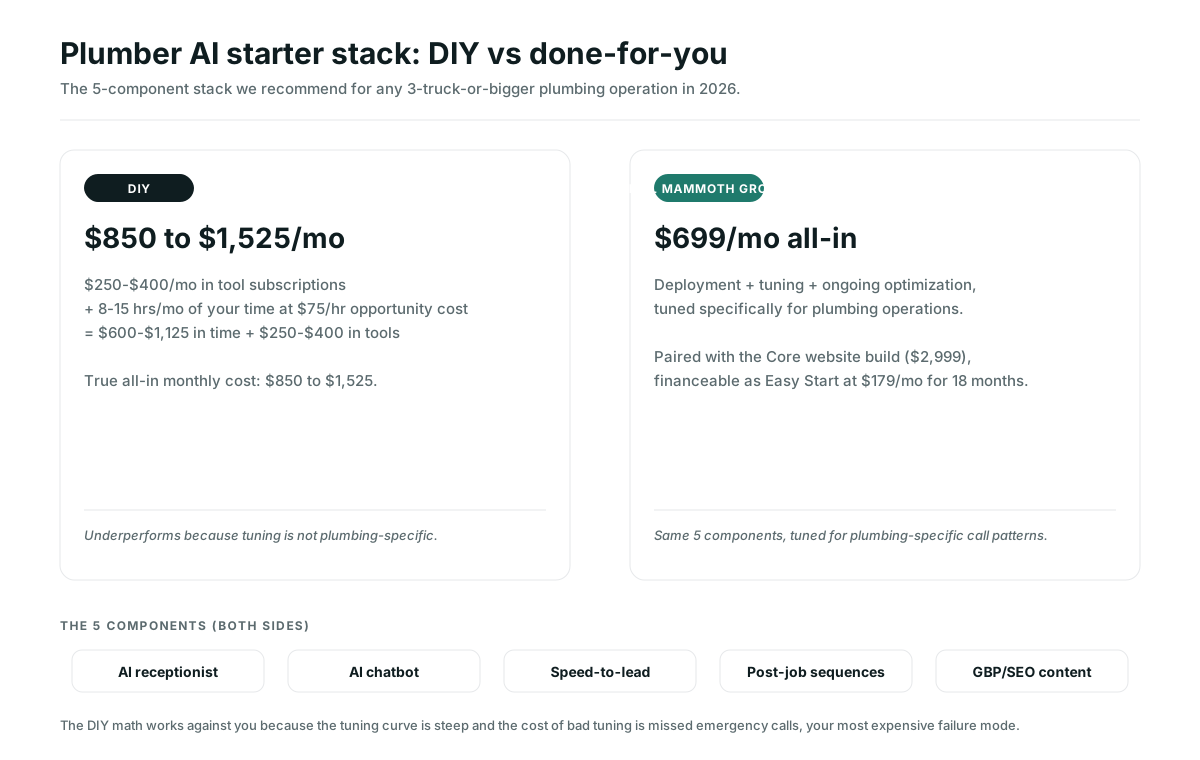 The 5-component AI starter stack we recommend for any 3-truck-or-bigger plumbing operation in 2026, with realistic DIY monthly cost vs SkillMammoth done-for-you pricing.
The 5 components every serious plumbing operation should have running by end of 2026:
- AI receptionist for 24/7 emergency call capture
- AI chatbot for website triage and after-hours booking
- Speed-to-lead automation for sub-60-second response routing
- AI-drafted post-job sequences for review collection and membership conversion
- AI-drafted GBP and seasonal content for SEO consistency
The DIY math (real numbers, not marketing): roughly $250 to $400 per month in tool subscriptions across the 5 components, PLUS 8 to 15 hours per month of your time configuring, debugging, tuning, training the AI on your services, and handling edge cases. At a $75/hr opportunity cost, that is another $600 to $1,125 per month in your time. Real all-in cost: $850 to $1,525 per month, with the catch that the system underperforms because it is not tuned to plumbing-specific patterns.
The SkillMammoth Growth support tier ($750/mo) includes deployment, tuning, and ongoing optimization of the full stack, tuned specifically for plumbing operations. Comes with the Smart Website Core build ($3,000, financeable as Easy Start at $150/mo for 24 months).
We are not saying do not DIY. We are saying that for most plumbing contractors, the math works heavily in favor of done-for-you because the tuning curve on AI tooling is steep and the cost of bad tuning is missed emergency calls, which is your most expensive failure mode.
What this actually looks like in practice
Brico Mechanical, the multi-trade contractor we feature most often (they do both HVAC and plumbing), runs the full AI stack we describe above. They ship 15+ after-hours leads per month directly through the AI receptionist + speed-to-lead system, with zero additional dispatcher staffing. Before the deployment, those after-hours calls hit voicemail and most did not call back.
That is the entire story. AI does not replace your dispatch team. AI catches the calls your dispatch team cannot be on at 11pm on a Saturday in February. The math is asymmetric: every captured emergency call is worth $400 to $5,000+ in revenue, and the AI receptionist costs the same whether it answers 1 call a month or 100.
What to do this week
- Pull your call data from the last 90 days. How many calls landed outside business hours? How many of those went to voicemail? What percentage of voicemail leads called back?
- Calculate your missed-call cost. Multiply the after-hours-voicemail count by your average emergency-job revenue. That is the monthly opportunity cost of not having an AI receptionist.
- Pick ONE use case to deploy first. For most plumbing contractors, the answer is AI receptionist (#1 above). For higher-traffic websites, it is AI chatbot (#2). For operations with strong inbound but weak follow-up, it is automated post-job sequences (#4).
- Read our plumber cluster for the broader marketing context: Plumber Website Design, How to Get More Plumbing Leads, Lead Generation for Plumbers.
- Or book a 30-minute strategy call at book a call and we will diagnose your specific bottleneck and recommend the right starting point.
FAQ
What is the single highest-ROI AI deployment for a plumbing contractor?
AI receptionist for after-hours emergency call capture. Every plumbing operation we work with has the same pattern: 30 to 50% of inbound calls happen outside business hours, and most of those go to voicemail. AI receptionist captures 40 to 60% of those previously-lost calls, which translates to 5 to 30+ additional booked emergency jobs per month for a typical 5-truck operation.
Do I need to replace my existing dispatcher with AI?
No. AI handles the calls your dispatcher cannot (outside hours, when they are on another line, when call volume spikes during a storm or freeze event). Your dispatcher still handles every call they are available for. AI is overflow capacity, not replacement.
How long does it take to deploy an AI receptionist?
SkillMammoth deployment is typically 2 to 4 weeks from contract signed to live answering. Most of that time is training the AI on your specific services, pricing tiers, dispatch rules, and FSM integration. DIY deployment varies widely (2 weeks to 3 months) depending on your technical comfort.
Will customers know they are talking to AI?
Modern AI receptionists are good enough that most callers do not notice, especially for the first 2 to 3 interactions (greeting, qualifying questions, booking). We always disclose AI usage on the second turn so customers know what they are talking to. Disclosure typically does not hurt conversion because by then the AI has already demonstrated competence.
What about AI for water heater estimates or repipe quotes?
Photo-based estimation works well for visible leaks and obvious water damage. It works less well for water heater replacement (which often requires checking gas line, venting, electrical) and repipe quotes (which require crawl space inspection and pipe condition assessment). For those, use AI to qualify the lead and book the in-person assessment, not to give a final quote.
Can AI integrate with my existing FSM (Housecall Pro, ServiceTitan, Jobber, FieldEdge)?
Yes, all major plumbing FSMs support API integration. We wire AI receptionist + chatbot + speed-to-lead routing directly into your existing FSM so leads flow into your dispatch workflow without manual data entry.
How much does the AI stack cost?
DIY: $250 to $400 per month in tool subscriptions + 8 to 15 hours per month of your time. SkillMammoth Growth tier ($750 per month) includes deployment + tuning + ongoing optimization, paired with the Core website build ($3,000, financeable). See full breakdown on our pricing page.
What if I am a 1-truck operator?
The AI receptionist still pencils, especially if you are losing emergency calls because you are on a job and cannot answer. The chatbot is less critical at small scale (you have time to respond manually). The post-job follow-up sequences are still high value because they drive review collection and membership conversion.
What about AI for commercial plumbing?
Most of the AI stack applies identically. The big differences are: commercial calls do not have the same after-hours emergency pattern (property managers call during business hours), and commercial lead qualification is different (you need to capture property manager contact + facility size + service contract terms). Adjust the AI chatbot qualification flow accordingly.
How is AI different for plumbing vs HVAC or roofing?
Plumbing has the most emergency-call volume of the three trades (water emergencies are 24/7), which makes AI receptionist disproportionately valuable. HVAC has more seasonal demand patterns (heating in winter, cooling in summer). Roofing has more storm-event surge demand. See our parallel posts: AI for HVAC and AI for Roofers.
Will AI replace plumbers eventually?
No. AI is great at communication, scheduling, qualification, and content generation. AI cannot turn a wrench, diagnose a leaking joint, snake a drain, or install a water heater. The physical trades are some of the safest jobs from AI displacement because they require physical presence and manual skill. AI just makes the marketing and dispatch side of plumbing operations more efficient.
Want to implement these strategies?
Book a free strategy call and learn how we can help grow your contractor business.
Book a Free Strategy Call