TL;DR
Adobe Express surveyed 433 business owners in June 2025: 44 percent post weekly, 18 percent daily, 28 percent plan nothing ahead, 63 percent feel pressure to post every day and seven in ten are burnt out by it. The fix is a system, and in 2026 the system costs about $25 a month: Claude Pro ($20) with a one-page Skill that holds your brand voice, plus Buffer ($5 a channel) or Metricool ($20 for unlimited scheduling) to publish. One 45-minute session a month turns 15 job photos and a voice memo into 20 posts; 15 minutes a week handles replies. Call it two hours a month. The jobs that still need a human are the photo, the opinion in the caption, and the reply to a real customer. Skip AI-generated job photos, skip paying $99 to $399 for an enterprise scheduler, and skip hiring posting out at $500 a month or more before your Google Business Profile and website are producing calls, because for a service business search still produces more of them.
Social media for a small business has one honest problem: it has to happen every week for as long as the business exists, and the owner is the only person who knows what to say. That combination is why 68 percent of the owners in Adobe's survey had taken a break from posting out of fatigue, and why the breaks turn into months. This post is the system we run for ourselves and set up for clients, with the exact tools, the exact prices and the file that makes an AI assistant sound like you instead of like an AI assistant.
What the survey says you are up against
Adobe Express's June 2025 survey of 433 US business owners is the most recent primary source with real numbers, and it describes the problem better than any agency pitch.
| Finding | Share of owners |
|---|---|
| Post weekly | 44% |
| Post daily | 18% |
| Post monthly or less | 39% |
| Do not plan content ahead at all | 28% |
| Feel pressure to post daily | 63% |
| Feel burnt out by content creation | 70% |
| Have taken a break from posting due to fatigue | 68% |
| Use TikTok and feel burnt out by it | 88% |
| Verdict | Owners say the ideal is seven posts a week and most manage one. The gap is a planning gap, not a talent gap: 28 percent plan nothing and another 45 percent plan a day or a few hours ahead. Source: Adobe Express, "How often should you really post?", June 2025, n = 433. |
One more figure from the same survey worth keeping: 34 percent said short-form video produced their highest engagement, but 62 percent of what they actually post is a single image. The format that works is the one owners avoid because it takes the most time. A system fixes that too, because a 20-second clip of a crew lifting a window into place needs no script when the caption is already written.
Decide what social is for before you automate it
For a home service or local professional business, social media does two jobs well and one badly. It keeps you familiar to people who already know you (past customers, neighbours, referral partners), and it gives a homeowner who found you on Google a second place to check that you are real and busy. It is a poor way to be found by strangers; our HVAC social media guide walks through what actually produces calls, and the short answer is reviews, job photos and the Google Business Profile, with Facebook and Instagram as the proof layer. So the target is not virality. It is three to five posts a week that look like a real company doing real work, published without the owner spending Sunday night on it.
Platforms, for most trades: Facebook and Instagram, plus the Google Business Profile updates feed (which most owners forget is a posting channel and which sits directly on your Maps listing). LinkedIn if you sell to businesses. TikTok only if you like making videos, given that 88 percent of the owners using it report burnout. YouTube is a different project, covered separately.
The $25-a-month stack
| Tool | Price (October 2026) | What it does in this system |
|---|---|---|
| Claude Pro | $20/mo ($17 on annual) | Writes the month's posts from your photos and notes, using a Skill that holds your voice |
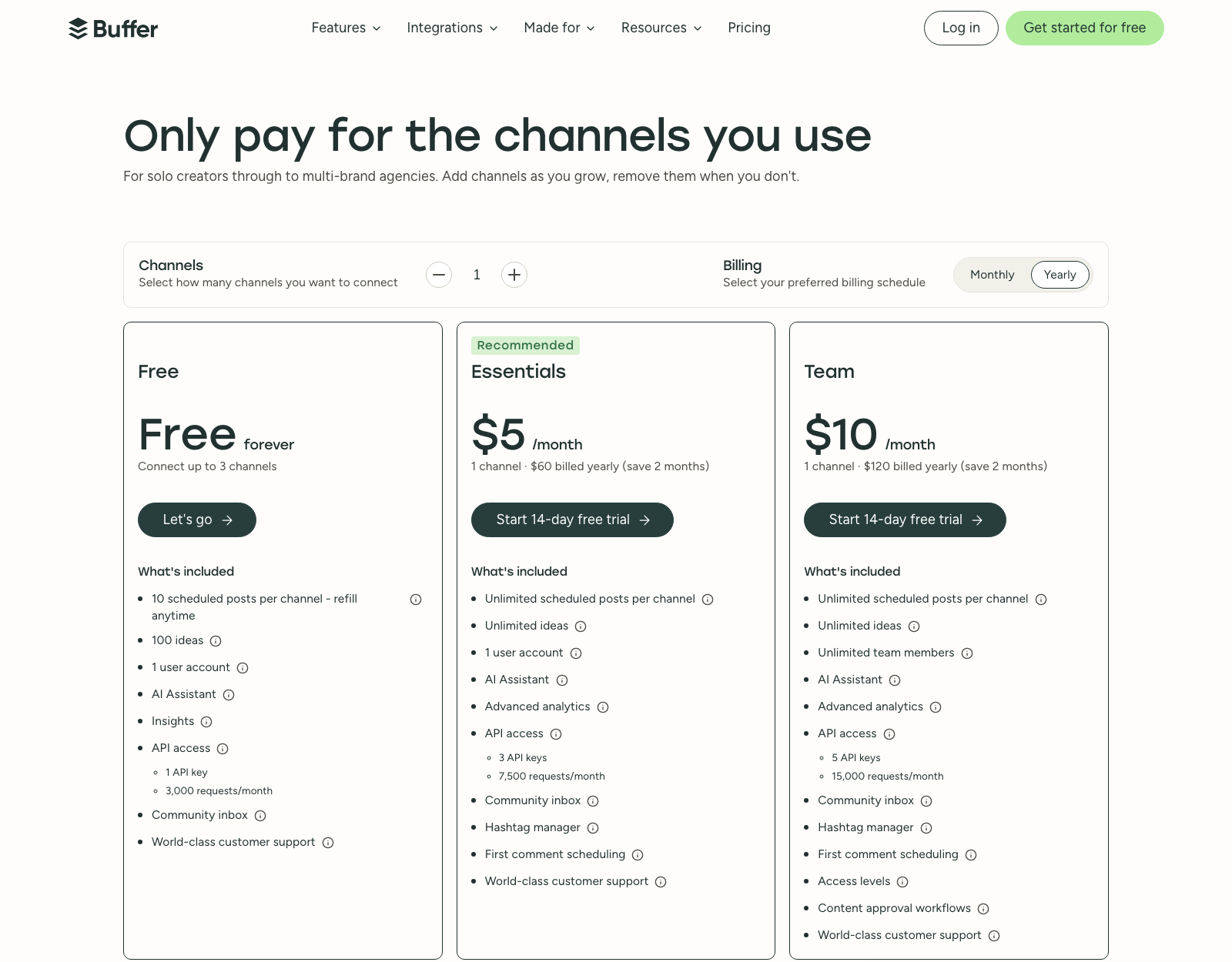
| Buffer Essentials | $5/mo per channel (free plan: 3 channels, 10 queued posts each) | Schedules and publishes to Facebook, Instagram, LinkedIn, Google Business Profile |
| Metricool Starter (alternative) | $20/mo (free plan: 20 posts a month) | Same job, unlimited scheduling, up to 10 brands, with analytics on which posts got clicks |
| SocialBee Bootstrap (alternative) | $29/mo (5 profiles) | Category-based recycling queues; what we use for one client's evergreen posts |
| Hootsuite | From $99/mo, up to $399 | Skip. Built for teams of marketers, priced like it. |
| Your phone camera | $0 | The only source of photos that should ever appear on your page |
| Verdict | Claude Pro plus Buffer for three channels: $35 a month. Claude Pro plus Metricool Starter: $40 with better reporting. Either beats a freelancer at $500 to $1,500 a month for the same posting cadence, and the owner's voice survives. | |
Why Claude rather than the AI button built into Buffer or Metricool? Those assistants write a caption from a prompt. They do not know that you never use the word "cheap," that you always name the neighbourhood, that your crews are called crews and not teams, or that the offer this month is a $150 furnace tune-up. The thing that makes AI output sound like you is a standing instruction file, and that is what a Skill is.
Want the system built and the first month scheduled?
We set up the voice file, the scheduler and the monthly routine for service businesses, then hand it to you.
The brand voice Skill: one file that does most of the work
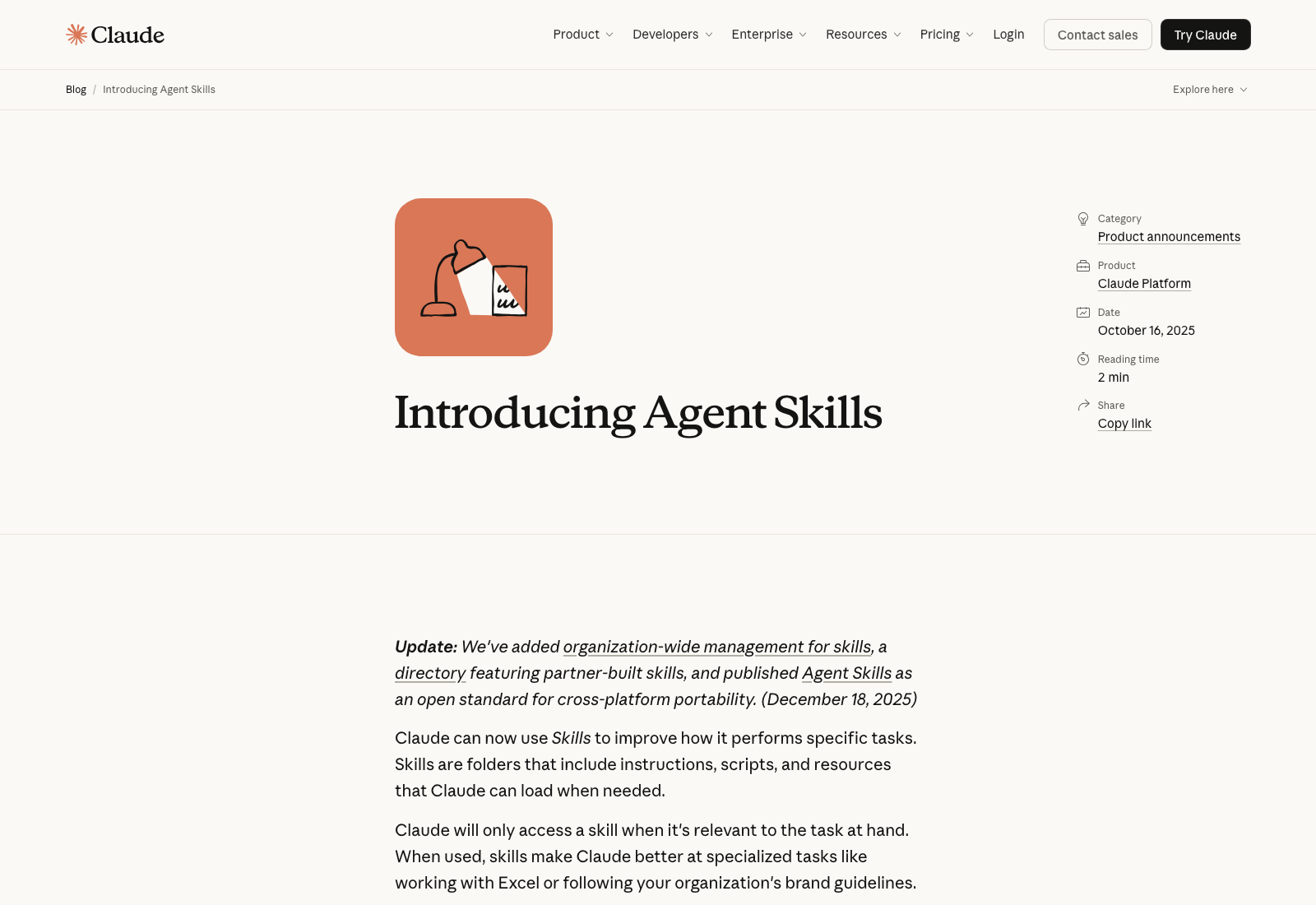
A Skill, in Claude, is a folder with a short markdown file called SKILL.md and, optionally, reference files next to it. Claude reads the file only when the task matches, so you can have a dozen and they do not get in each other's way. Skills are included on Claude Pro, Max and Team plans; you enable them under Settings and Capabilities, and Claude will build one for you if you ask ("make me a skill for writing our social posts"). Anthropic published the format as an open standard in December 2025, and the same file works in the Claude app, in Claude Code and through the API, so it travels with you if you ever change tools. (ChatGPT's plan comparison now lists a "Skills beta" row too, so the idea is not going anywhere.) Our longer explanation is in Claude connectors and Skills, explained for business owners.
Here is what a social media Skill for a service business contains. Keep it under a page; the point is constraint, and every line should be something a new hire would get wrong without being told.
- Who we are, in two sentences. Trade, service area by neighbourhood name, how long in business, who answers the phone. "Family-owned HVAC company in the north metro since 2011; Dan answers the phone himself."
- Who reads this. Homeowners 35 to 65 in named suburbs; property managers; the two referral partners you want to flatter occasionally.
- Voice rules. Plain and specific, with the town named and the problem the job solved spelled out. No exclamation points, no emoji strings, no hashtags beyond two, no "we are thrilled," never "cheap," never a promise about timing you would not put in a contract.
- The five post formats and the monthly mix. Job of the week with a before and after (8 a month). One-question tip (5). Review quote with a thank-you (4). Behind the scenes, crew and trucks (2). Offer or seasonal reminder (1). That is 20 posts, five a week.
- Standing offers and links. The current promotion with its price and end date, the booking link, the phone number, the review link.
- What never goes out. Customer names or addresses without permission, competitor names, politics, anything about a job that is still in dispute, any image the owner did not take.
- Output format. A table with date, channel, caption, which photo file, and a 20-word on-screen text line for the video versions, so it pastes into Buffer or Metricool's bulk import.
The first draft of this file takes 30 minutes with Claude asking you the questions. After that it only changes when the offer does.
The monthly routine, timed
Day 1: the 45-minute batch
Dump the month's job photos into a project (15 is plenty; three jobs photographed properly beat 30 blurry ones). Record a five-minute voice memo while you drive: which jobs were interesting, what the weather is doing to demand, what the offer is, anything a customer said that made you laugh. Give Claude the photos and the transcript and ask for the month on the Skill's format. Read the 20 posts in one sitting. You will change five or six, usually to add the detail only you know, and delete two. That editing is the job; the typing was never the job.
Day 1, plus 20 minutes: scheduling
Paste or import the table into Buffer or Metricool, attach the photos, set the posting times (weekday mornings and Saturday, which 41 percent of owners in the Adobe survey named as their best engagement day), and walk away. Both tools will post the Google Business Profile updates too, which is the channel most owners leave empty.
Weekly: 15 minutes of replies
Comments and messages get a human. Open the app, answer every comment with a sentence that uses the person's name, and move any lead into your CRM the same day. This is the only part of social that produces a job directly, and it is the part automation should never touch. If you want help drafting, give Claude the comment and ask for two options; still send it yourself.
Monthly: 10 minutes of looking
In Metricool or Buffer's analytics, sort by link clicks and saves, not likes. Note which of the five formats produced them. Tell the Skill. Next month's mix shifts toward what worked. In our experience with service businesses the before-and-after job post wins almost every month, and the tip post wins on saves.
Total: about two hours a month, against the six hours a week owners typically report. The True Blue case in our social media on autopilot post was the first version of this system; the Skill replaced the prompt library, and the scheduler replaced the spreadsheet.
Three things to skip
AI-generated job photos. Every tool will offer to make one. A homeowner can tell, Meta and Google label AI imagery, and the first time a neighbour recognises a stock house with your logo on it you have spent your credibility for a thumbnail. Real photos, even average ones, are the entire reason social works for a trade. The same goes for inventing customer quotes; use the real reviews, and only with the reviewer's first name.
Posting the identical caption to five platforms. It is the default in every scheduler and it reads as a broadcast. The Skill can produce the Instagram version (shorter, the photo carries it), the Facebook version (a sentence more, the neighbourhood named), and the Google Business Profile version (service and town in the first line, because that one is indexed). Ask for the three variants; it costs nothing.
Outsourcing posting before search is fixed. A social manager at $500 to $1,500 a month posting three times a week is the most common marketing spend we see that produces no measurable calls. If the Google Business Profile has no photos from this year and the website takes six seconds to load, fix those first; our comparison of search against social for service businesses has the numbers. Run social yourself on the $25 stack, and spend the agency money where the phone rings. Our own social media service exists, and we still say this to most of the businesses that ask about it.
Frequently asked questions
Can AI run my small business social media?
It can write the posts and a scheduler can publish them, which is most of the time cost. It cannot take the photos, and it should not answer customers. With a voice file (a Claude Skill) and Buffer or Metricool, an owner can produce 20 posts a month in about two hours including replies, for roughly $25 to $40 in tools.
How often should a small business post on social media?
Three to five times a week on your main platform is enough to look active, and the Adobe Express survey found owners themselves name seven a week as ideal while 44 percent manage one. Consistency matters more than volume; a scheduled 20-post month beats a burst of daily posts followed by silence.
What is a Claude Skill and do I need one for social media?
A Skill is a folder with a short SKILL.md file of instructions that Claude loads when a task matches. For social media it holds your voice rules, post formats, offers and banned words, so every batch of posts sounds like your company without re-explaining it. Skills are included on Claude Pro, Max and Team plans; Claude can draft the file for you in about 30 minutes.
Which social media scheduler is best for a small business?
Buffer at $5 per channel per month if you post to two or three channels and want the simplest tool. Metricool Starter at $20 a month if you want unlimited scheduling and better analytics on clicks. Both have free plans sufficient to test for a month. Hootsuite starts at $99 and is built for marketing teams.
Should I use AI-generated images for my business posts?
No. Use photos your crew took, even imperfect ones. Platforms label AI imagery and customers notice. For a service business the authenticity of the photo is the point of the post.
Is social media or SEO more important for a service business?
Search, by a wide margin, for getting found by strangers who need the service now. Social keeps you familiar to past customers and acts as proof for people who found you on Google. Run social cheaply and consistently, and put the agency budget into the Google Business Profile and the website first.
Want to know if your social is helping or just taking time?
Free 10-minute website audit, including what a homeowner sees when they check your Google profile and your Facebook page side by side, delivered within 48 hours.