TL;DR
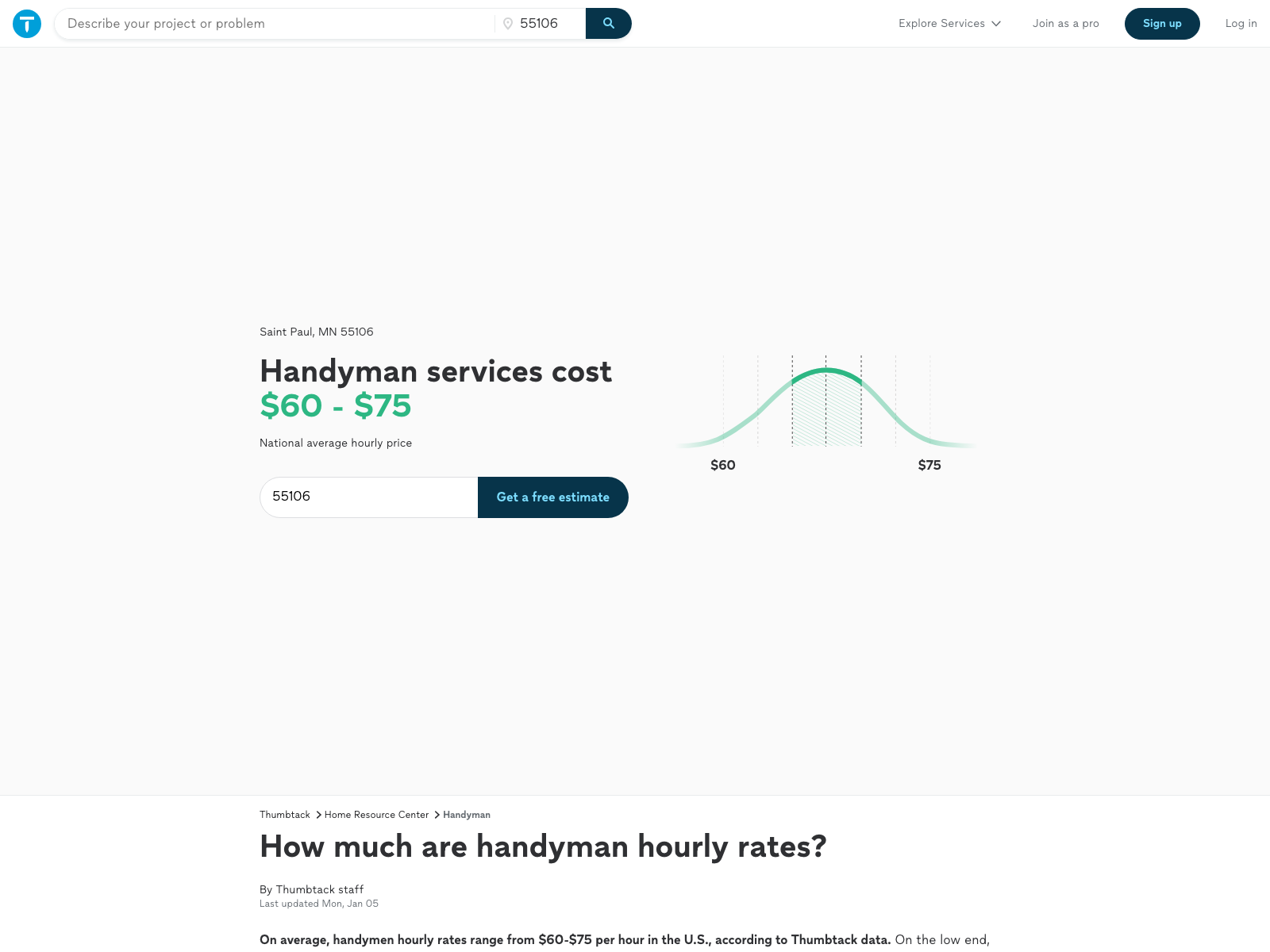
The 2026 handyman hourly rate runs $60 to $75 nationally per Thumbtack's data, with the low end at $45 to $50 and experienced pros in high-cost metros charging $100 to $125. Typical flat-rate jobs land between $193 and $379, a simple under-2-hour visit runs $178 to $220 all-in, and a full day of work bills $701 to $1,105. If you're hiring: the $50 cash guy and the $95 insured pro are different products, and the difference shows up when something goes wrong. If you're the handyman: your rate is a math problem, not a confidence problem, and the cost stack below shows why most underpriced handymen are earning less than their W-2 neighbors without knowing it.
This post serves both sides of the transaction on purpose. Homeowners searching this phrase want to know what's fair; handymen search the same words at 10pm wondering if they're undercharging (they usually are). The numbers are the same either way, and the honest version helps both: a fair rate, understood, beats a cheap rate resented.
The 2026 numbers
| Pricing basis | Typical 2026 range |
|---|---|
| Hourly, national average | $60 to $75 |
| Hourly, low end (new or rural) | $45 to $50 |
| Hourly, high end (experienced, big metro) | $100 to $125 |
| Typical flat-rate job | $193 to $379 |
| Simple visit, under 2 hours, all-in | $178 to $220 |
| Full-day project | $701 to $1,105 |
| Furniture/equipment assembly | $187 to $365 |
| Interior painting tasks | $398 to $925 |
| Verdict | Anchor at $60 to $75 an hour with a 2-hour minimum, and quote flat rates built from those internals for anything you can scope in advance. |
Why the range is so wide
Four variables move a handyman's rate more than everything else combined. Insurance and legitimacy: general liability, a business entity, and the ability to hand you a real invoice add real cost, and their absence is why the cash guy can charge $45. Skill scope: a handyman who can tile, hang doors, patch drywall, and troubleshoot a running toilet operates near licensed-trade quality on small jobs, and prices accordingly; note that electrical and plumbing work beyond minor repairs legally belongs to licensed trades in most states, and a good handyman says so. Metro: the same TV mount bills double in San Jose versus rural Kansas. Demand position: the handyman with 80 five-star reviews and a two-week waitlist has no reason to price like the one who needs this week's work, which is the quiet lesson for operators in the second half of this post.
For homeowners: how to read a quote
A fair hourly quote comes with a minimum (commonly 2 hours, sometimes a flat trip fee), because drive time, materials runs, setup, and cleanup are real work. Batching is the money move: the $75-an-hour pro who clears your whole punch list in one four-hour visit costs less per task than the $50 guy making four separate trips. Ask two questions before price: are you insured, and will this be invoiced? A yes to both is worth a premium measured in tens of dollars against a downside measured in thousands, since an uninsured fall on your property can become your homeowner's claim. The rate difference is the cheapest insurance you'll ever buy.
Run a handyman business that deserves better margins?
We build handyman websites that rank for exactly these searches and book the batched, full-day jobs. Free 10-minute audit of your current site.
For operators: the cost stack that sets your floor
Price from costs up, never from courage down. Say you want to match a $30-an-hour W-2 job with benefits. Self-employed, you fund both sides of payroll tax, your own health insurance, tools, truck, fuel, general liability, and the unpaid hours: quoting, invoicing, driving, and the Tuesday nobody booked. A solo handyman billing 25 hours a week (which is a good week once real utilization is counted) with $1,500 a month of fixed business costs needs roughly $55 an hour just to clear that $30 equivalent. That's the arithmetic behind the national average, and it's why $45-an-hour operators working 50-hour weeks feel broke: they're subsidizing every customer. Run your own numbers with the same margin discipline in our markup vs margin guide, because hourly-rate thinking and margin thinking converge on the same floor.
Hourly or flat rate?
Hourly protects you on unscoped work: the mystery drywall patch, the "while you're here" list, anything behind a wall. Flat rates win everywhere else, for a reason that has nothing to do with math: customers hate open meters, and a flat $220 for the ceiling fan feels better than 2.5 uncertain hours at $85, even when it's the same number. Flat pricing also pays you for speed; the faster you get, the more your effective hourly rises, which is the reward hourly billing quietly confiscates. Build your flat menu from your hourly internals (task time × rate + materials + a scope buffer), publish the common ones, and keep hourly for genuine unknowns. The quoting mechanics and the paperwork that backs them live in our handyman contract template, and every add-on discovered mid-job goes through a change order, even a $60 one. Especially a $60 one, since small unpapered favors are how punch lists turn into charity.
Raising your rate without losing your book
The operators stuck at $50 stay there because every customer they have was acquired at $50. The fix is sequencing, not bravery: new customers get the new rate first (nobody who just found you knows your old price), existing customers get 60 days' notice at the next natural moment, and the bottom 20% of your book (the price-hagglers, the far drives) get the full new rate immediately, because losing some of them is the raise working as intended. Demand position does the rest: reviews, a real website, and rankings for your town's searches are what let the calendar stay full at $85 instead of $55. That system is what our handyman business guide and the broader SEO for contractors playbook are for.
The tools that send that invoice and fire the review request are compared in handyman software.
Frequently asked questions
What is the average handyman hourly rate?
$60 to $75 an hour nationally in 2026 per Thumbtack's marketplace data, with newer or rural handymen at $45 to $50 and experienced pros in expensive metros at $100 to $125. Most quotes also carry a minimum, commonly two hours or a flat trip fee, so a small job's real cost runs $178 to $220.
How much should a handyman charge per hour?
Enough to clear the cost stack: both halves of self-employment tax, insurance, tools, vehicle, and the unpaid hours between billable ones. At realistic utilization, matching a $30-an-hour employed wage takes roughly $55 an hour billed, which is why the national average sits where it does. Price from costs up, then let demand raise it.
Why do handymen charge a minimum fee?
Because a 30-minute job isn't 30 minutes: drive time, materials pickup, setup, and invoicing surround it. Minimums (two hours, or a flat service call fee) keep small jobs from being money-losers. For homeowners, the smart response is batching several tasks into one visit, which lowers the effective cost of every item on the list.
Is it better to charge hourly or flat rate for handyman work?
Flat rate for anything you can scope in advance: customers prefer certainty, and speed becomes your profit instead of your penalty. Hourly for genuine unknowns like hidden damage or open-ended punch lists. Most successful operators publish flat prices for their common 20 jobs and quote hourly only past the edge of scope.
Should I hire the $50 handyman or the $90 one?
Ask two questions: insured, and invoiced? The gap between those quotes is usually legitimacy cost, not greed. The uninsured discount runs $20 to $40 an hour and carries the tail risk of an injury or damage claim landing on your homeowner's policy. For a one-hour picture hang it may not matter; for ladder work it does.
Want your calendar full at the higher rate?
Rankings, reviews, and a website that books batched jobs are what move a handyman from $55 to $85 an hour. Flat plans from $350 a month, no contracts.