TL;DR
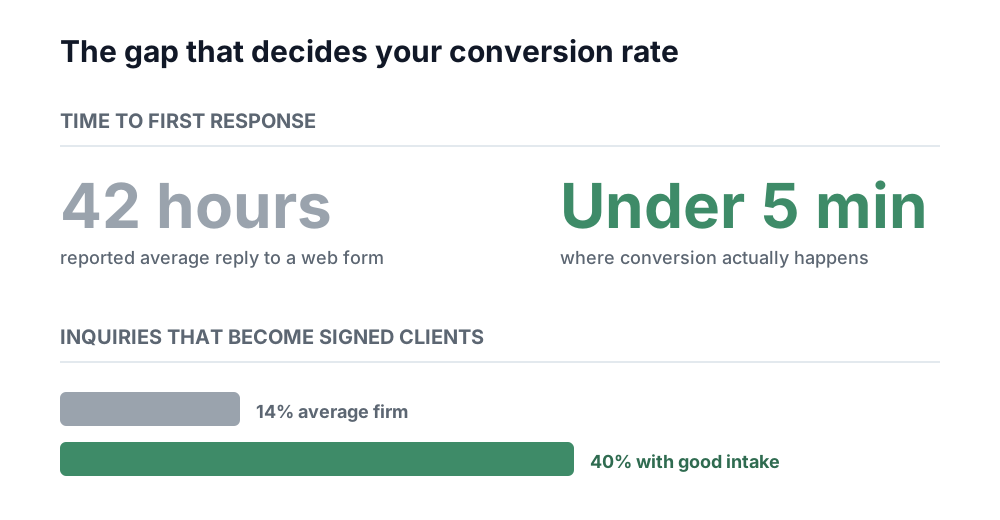
Most firms do not have a lead problem. They have an answering problem. Industry intake research puts the average law firm's response to a web form at around 42 hours, while roughly a quarter of firms never respond to online form submissions at all, and about a third of calls to small and mid-sized firms go unanswered during business hours.
The average firm signs somewhere around 14% of the inquiries it receives. Strong intake operations report 40% and up. That gap is not talent or advertising budget. It is who picks up.
So the order of operations is: fix intake, then referrals, then Google Business Profile and reviews, then paid. Spending on acquisition before intake works is pouring water into a bucket with a hole in it.
Do this arithmetic before you spend anything
Legal has unusual economics: acquisition costs that would destroy a plumbing company are perfectly rational when a single case is worth five or six figures. That cuts both ways, because it also means waste hides easily.
Work out three numbers before reading further:
- Average case value. Not your best year, your median settled case, net of costs.
- Inquiry to signed rate. Of the last 50 people who contacted you, how many signed? If you cannot answer this, that is the first project.
- Response time, measured rather than assumed. Submit your own form on a Saturday morning and time the reply. Most owners are shocked.
Improving the second number is almost always cheaper than increasing inquiry volume, and it improves the return on every channel you already pay for at the same time.
1. Fix intake first, because nothing else compounds without it
The research on this is consistent even allowing for the fact that much of it comes from intake vendors with something to sell. Contact inside five minutes and conversion improves dramatically against contact after thirty. The mechanism is not mysterious. An injured person contacting three firms signs with whoever calls back first and sounds competent.
What that means in practice:
- Answer the phone, including after hours. If a third of calls go unanswered, and legal problems do not respect office hours, an answering service is not a luxury purchase. It is the cheapest case acquisition available to you.
- Text back every missed call automatically. A missed call with no follow-up is a case that went to the firm down the street. An automatic text inside 60 seconds keeps it alive until a human can call.
- Route by case type at the first touch. The best site in our review of five law firm websites uses checkboxes in the hero for motor vehicle, workers' compensation, slip and fall and dog bite. That is qualification happening before a human is involved.
- Track every inquiry in one place. If intake lives in an inbox, a notepad and someone's memory, you cannot know your conversion rate, so you cannot improve it.
The full mechanics are in the follow-up system. It was written for trades, and the plumbing is identical.
2. Referrals, made into a system rather than a hope
Referrals remain the highest-converting source of legal work, and most firms treat them passively. Two audiences to be deliberate about.
Other lawyers. Attorneys who do not handle your practice area are a steady source if they remember you exist. The firms that get this right stay in contact deliberately rather than waiting for a lunch to happen. Know your state's rules on referral fees and fee sharing before you formalize anything.
Past clients and their circle. A closed case is a person with a network who has just had a memorable experience. Ask at the moment of resolution, when goodwill is at its peak, rather than a year later in a newsletter.
3. Google Business Profile, then reviews
For a great deal of legal work, particularly personal injury, family and criminal, the search is local and the map pack sits above every organic result. A complete profile with correct practice area categories, real photographs and consistent hours costs nothing but an afternoon.
Reviews are the multiplier, and they are the single strongest differentiator in a market where every competitor claims to be award-winning. One of the firms in our review states a specific count: 284 reviews, linked from the hero. Another has over 500 five-star reviews and mentions it below the fold. Specific numbers beat adjectives.
Two cautions particular to legal. Review velocity should be steady rather than spiky, because bursts attract filters. And your state bar regulates attorney advertising, including testimonials, claims of specialization and required disclaimers, with meaningful variation between states. Check your own rules before running any review campaign. That constraint is real and most generic marketing advice ignores it entirely.
Our method for steady review generation is in how to get 100 Google reviews, and profile setup is covered in optimizing your Google Business Profile. If your profile has been suspended, which happens to firms with multiple offices more than most, start with the reinstatement guide.
Want to know your real response time?
We will submit a form on your site, call your main line after hours, and send you a short recording of exactly what a potential client experiences. Free, and often uncomfortable.
4. Content that answers the questions people actually ask
The searches that precede hiring a lawyer are rarely "personal injury attorney." They are "how long do I have to file after a car accident," "what is my case worth," "do I need a lawyer for a minor accident." Each of those is a page, and each demonstrates competence better than a page claiming competence.
The best site in our review explains Minnesota's no-fault rules in plain language and corrects a common misconception directly. That page earns trust before it asks for anything. Its weakness is that it then asks for nothing at all, which is the mistake to avoid: answer the question, then offer the next step in the same screen.
5. Paid, last rather than first
Legal is among the most expensive paid search markets there is, because case values justify it. That means paid works, and it also means it punishes weak intake harder than any other channel. Every dollar of a $200 click is wasted if the form response takes 42 hours. The Google Ads for lawyers guide prices the click by practice area, from $6 for estate planning to $509 for truck accident cases.
Sequence matters more than channel choice here. Intake, then organic and profile, then paid to accelerate what already converts.
What to skip
- Shared lead marketplaces. The same economics we covered in the Thumbtack comparison apply, amplified. You pay for a contact that three other firms also received, and legal contacts are not cheap.
- Billboards and TV, until you are large. They build recall at a scale that only pays back with volume behind it. A three-attorney firm buying awareness before intake works is subsidizing a lesson.
- Directory profiles beyond the main two or three. The long tail of paid legal directories mostly sells you a listing that ranks for your own name.
- Thin city pages. A page per suburb with the city name swapped and nothing else is the most common law firm SEO waste. It does not rank, and at volume it can drag on the whole site.
Your first 30 days
- Week one. Measure your real response time and your inquiry-to-signed rate. You cannot fix what you have not counted.
- Week one. Turn on missed-call text back and decide who covers after hours.
- Week two. Complete the Google Business Profile properly, correct categories included.
- Week two. Put a case-type selector and a phone number in your homepage hero, above the fold.
- Week three. Start asking every resolved client for a review, within your bar's rules.
- Week four. Write the three questions clients ask most, one page each.
None of that requires a new website, and all of it improves the return on the one you have.
Related reading
- Five law firm websites reviewed, what converts and what leaks
- The follow-up system that converts the inquiries you already get
- How to get 100 Google reviews
- Law firm marketing, how we work with firms
Frequently asked questions
How do law firms get new clients?
In rough order of return: referrals from past clients and other attorneys, local search including the Google map pack, content answering the questions people ask before hiring, and paid search. Underneath all of them sits intake, because every channel converts at whatever rate your answering process allows.
How fast should a law firm respond to a lead?
Inside five minutes, and ideally under a minute for the first automated acknowledgement. Industry research consistently shows conversion falling sharply after the first five minutes, while the reported average firm response to a web form sits around 42 hours.
What percentage of law firm leads convert?
The commonly cited average is around 14% of inquiries becoming signed clients, with well-run intake operations reporting 40% and above. One vendor reports about 17.6% across its user base. Treat these as directional, since most published figures come from companies selling intake software.
Are lead generation services worth it for law firms?
Shared-lead marketplaces are rarely a foundation. You pay per contact, the same contact goes to several firms, and legal contacts are expensive. They can fill a gap while owned channels come up, but the economics only work with fast intake and a high case value.
Can law firms ask clients for reviews?
Generally yes, but attorney advertising is regulated by your state bar and the rules on testimonials, endorsements and disclaimers vary meaningfully between states. Check your own jurisdiction's rules before running any review campaign, and avoid anything that could read as a guarantee of outcome.
How much should a law firm spend on marketing?
Work backwards from case value and conversion rather than from a percentage of revenue. If your average signed case is worth $15,000 net and you sign one in seven inquiries, you can afford a great deal per inquiry. If you sign one in twenty because nobody answers the phone, no budget will save the channel.
Do law firms need a blog?
Not a blog in the sense of firm news, which nobody reads. Pages answering specific questions clients ask before hiring, such as filing deadlines or what a case is worth, do real work because they match what people actually search and they demonstrate competence rather than asserting it.