TL;DR
There is exactly one HVAC certification required by federal law: EPA Section 608, which anyone who handles refrigerant must hold. It comes in Type I (small appliances), Type II (high-pressure), Type III (low-pressure), and Universal (all three), it never expires, and the exam typically costs $25 to $150 depending on the provider and proctoring. Everything else is a license or a credential: state and city HVAC licenses (rules vary wildly by state), and voluntary certifications like NATE that raise your pay rather than your legality. Realistic timeline to employable: 6 to 12 months through a trade program or 3 to 5 years through an apprenticeship that pays you while you learn. The full map, in order, below.
This guide serves two readers. If you're getting into the trade, it's the shortest honest path from zero to certified. If you own an HVAC company, it's the recruiting cheat sheet: the techs you want to hire are searching exactly this, and the shops winning the labor war are the ones that answer these questions on their own careers pages.
The one certification the law requires: EPA 608
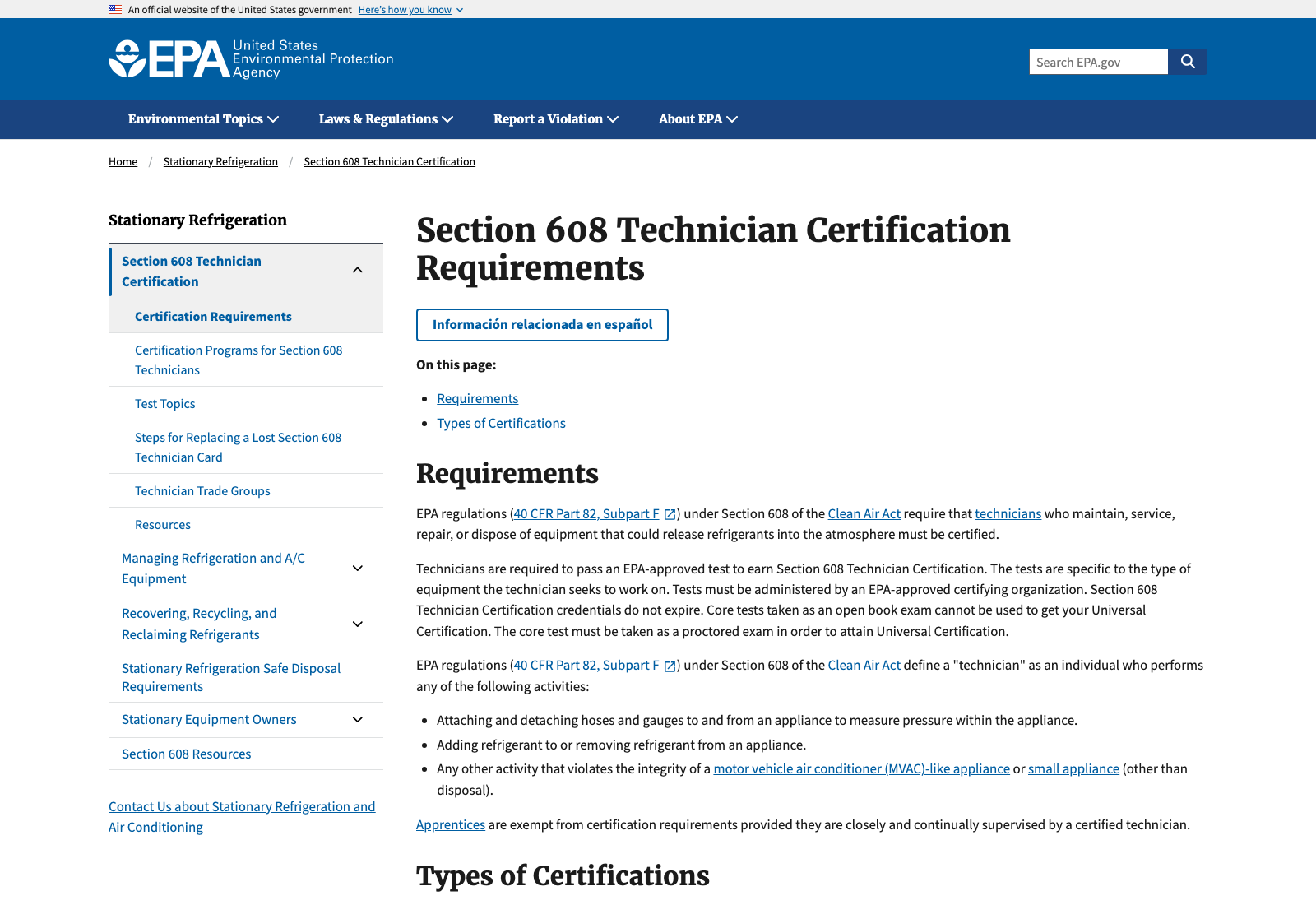
Under Section 608 of the Clean Air Act, anyone who maintains, services, repairs, or disposes of equipment that could release refrigerant must be certified. That includes work as basic as attaching gauges to a system or adding refrigerant. The EPA's own definition is broad on purpose, and the practical translation is simple: you cannot legally do residential AC work without it. Apprentices are exempt only while closely and continually supervised by a certified tech.
The four 608 types, and which one to take
| Type | Covers | Who needs it |
|---|---|---|
| Type I | Small appliances (window units, domestic fridges) | Appliance techs |
| Type II | High-pressure appliances (residential AC, heat pumps) | Most residential HVAC techs |
| Type III | Low-pressure appliances (chillers) | Commercial and industrial techs |
| Universal | All three. Take this one. It costs barely more, never expires, and no employer has ever complained about it. | |
One rule trips people up: an open-book core exam cannot qualify you for Universal. The core test must be proctored, in person or via approved online proctoring. Exams run through EPA-approved certifying organizations (ESCO Institute is the biggest name), and pricing typically lands between $25 for a basic Type I online test and $150 for a proctored Universal exam with study materials. As credentials go, it's one of the cheapest career unlocks in the American economy.
Licenses are a different thing, and they're state by state
EPA 608 makes refrigerant work legal. Whether you can pull permits and operate as an HVAC contractor is a state and city licensing question, and there's no national answer: some states run full contractor licensing with trade exams and experience requirements, others push it down to counties and cities, and a few barely regulate the trade at all. Before you plan a career or a company around any assumption here, check your state's contractor licensing board directly. If you're an owner hiring across state lines, this is also why a great tech from one state sometimes can't run jobs in yours on day one.
Hiring techs is marketing now.
The best HVAC candidates Google your company before applying. We build careers pages and recruiting funnels into HVAC websites, alongside the customer side. Free 10-minute audit of what techs currently see.
The certifications that raise your pay
After 608, everything is optional, and some options are worth real money. NATE (North American Technician Excellence) is the industry's flagship: employer surveys and job postings consistently price NATE-certified techs above market, because it signals verified competence rather than seat time. HVAC Excellence runs a parallel credential ladder from employment-ready through master specialist. Manufacturer certifications (Mitsubishi, Daikin, Carrier and the rest) matter most in ductless and heat-pump work, where the manufacturer's dealer tiers gate the best equipment pricing. The honest ordering for a new tech: 608 Universal first because it's the legal floor, then employer-paid NATE once you're working, then manufacturer training as your shop's product mix dictates.
How long it actually takes
Three real paths into the trade:
- Fast track: study for 608, pass Universal, get hired as a helper. Weeks, not months. You'll earn helper wages while the real learning happens on trucks.
- Trade school: 6 to 12 months for a certificate, up to 2 years for an associate degree. Programs commonly bundle 608 prep and hands-on lab time, and cost anywhere from about $1,500 at community colleges to five figures at private schools.
- Apprenticeship: 3 to 5 years, paid from day one, usually the best-trained techs at the end. Union and non-union programs both exist and both are chronically oversubscribed in good markets.
The trade's math favors starting: HVAC consistently ranks among the fastest-growing skilled trades, the median tech is aging out, and the timeline compares well against the trades we've mapped in our plumber timeline and electrician timeline guides.
For owners: the recruiting read
Every question in this post is a search your next hire is typing. The shops that win them publish answers: a careers page that says what certifications you pay for, whether you fund NATE, what a year-one helper actually earns, and what the path to lead tech looks like. That page costs nothing to write and outperforms another month of job-board spend, for the same reason customer-side content works: showing up with real answers beats renting attention. If your company's whole web presence is a phone number and a logo, start with our guide to building an HVAC business, then the HVAC SEO playbook for making it findable.
Frequently asked questions
What certification do you need for HVAC?
Federally, one: EPA Section 608 certification, required for anyone who handles refrigerant. Most techs take the Universal exam, which covers all appliance types and never expires. State or city HVAC licensing is separate and varies by location, and credentials like NATE are voluntary but raise pay.
How much does HVAC certification cost?
The EPA 608 exam typically runs $25 to $150 depending on type, provider, and proctoring, with Universal at the top of that range. Trade school programs that include 608 prep run from about $1,500 at community colleges into five figures at private schools. Apprenticeships flip the math: you're paid while you train.
How long does it take to become an HVAC technician?
You can be legally certified for refrigerant work in weeks by passing the 608 exam, employable as a helper immediately after. Trade school takes 6 to 12 months for a certificate; apprenticeships run 3 to 5 years and produce the most complete techs. Most people are running calls independently within 1 to 2 years on any path.
Does EPA 608 certification expire?
No. Section 608 credentials do not expire, per the EPA. If you lose your card, you request a replacement from the organization that certified you. The one catch worth knowing up front: an open-book core exam can't be upgraded to Universal, so take the proctored core the first time.
Is NATE certification worth it?
For a working tech, usually yes, and ideally on your employer's dime. NATE consistently commands a wage premium in job postings because it verifies competence with an exam rather than attendance. For brand-new techs it's premature: get 608, get hired, get a year of truck time, then let your shop fund NATE.
Run an HVAC company that can't hire fast enough?
We build the websites that bring in customers on one side and qualified techs on the other. Flat pricing from $350 a month, no contracts.