TL;DR
We reviewed seven real home builder websites on October 15, 2026, from a national on-your-lot builder to three Minneapolis custom shops, against six things a builder site has to do: show a plan or a project with numbers on it, give a price signal, offer a next step that is not "contact us," explain the process, load for a crawler, and prove the work. Schumacher Homes does the most of them, with a financing offer in the header, a plan search by ZIP and a "Schedule a Meeting" button. Three of the seven have no call to action above the fold, two have no visible price signal of any kind, and one renders a blank hero to anything that is not a browser with JavaScript. What a builder site costs: $3,000 to $8,000 for a built site you own (ours), $5,750 to $14,390 one-time at Built-Right Digital, $12,000 to $24,000 at Hook, and $15,000 for Builder Funnel's website-plus-marketing foundation. The builder-specialist shops, Blue Tangerine among them, quote. The table below has the grades.
A custom home is the largest purchase most people make, and the sales cycle runs 8 to 18 months, which means the builder's website is doing a different job than a roofer's. Nobody books a $700,000 build from a hero button. The site has to earn a second visit, then a third, then a meeting, and most builder sites are designed as photo albums instead. This review grades seven real sites on the six things that turn a visitor into a meeting, then prices the options for building one. Disclosure: Skill Mammoth builds websites for home builders and contractors, our Core site is $3,000 and our Pro site is $8,000, and we say so where it matters. The strategy behind the site is in home builder marketing, and the agencies that specialize in builders are ranked in best home builder marketing agencies.
The six things a builder website has to do
Show a plan or a project with numbers on it, because "beautiful homes" is not information and "2 bed, 2 bath, 1,115 square feet" is. Give a price signal, which can be a starting price, a price range, a financing rate or a "from" number on a plan, because a visitor who cannot tell whether you build $400,000 homes or $4 million homes leaves. Offer a next step that is not "contact us": a plan search, a model-center finder, a lot evaluation, a schedule-a-meeting button or a cost calculator. Explain the process, because the eight-month buyer is deciding whether to trust you with a year of their life. Load for a crawler, because a hero that only renders with JavaScript is invisible to Google and to the AI assistants people now ask for builder recommendations. And prove the work, with reviews, awards or named projects.
Seven builder sites, graded
| Builder | Plans or projects with numbers | Price signal | Next step beyond "contact" | Process | Crawlable | Proof |
|---|---|---|---|---|---|---|
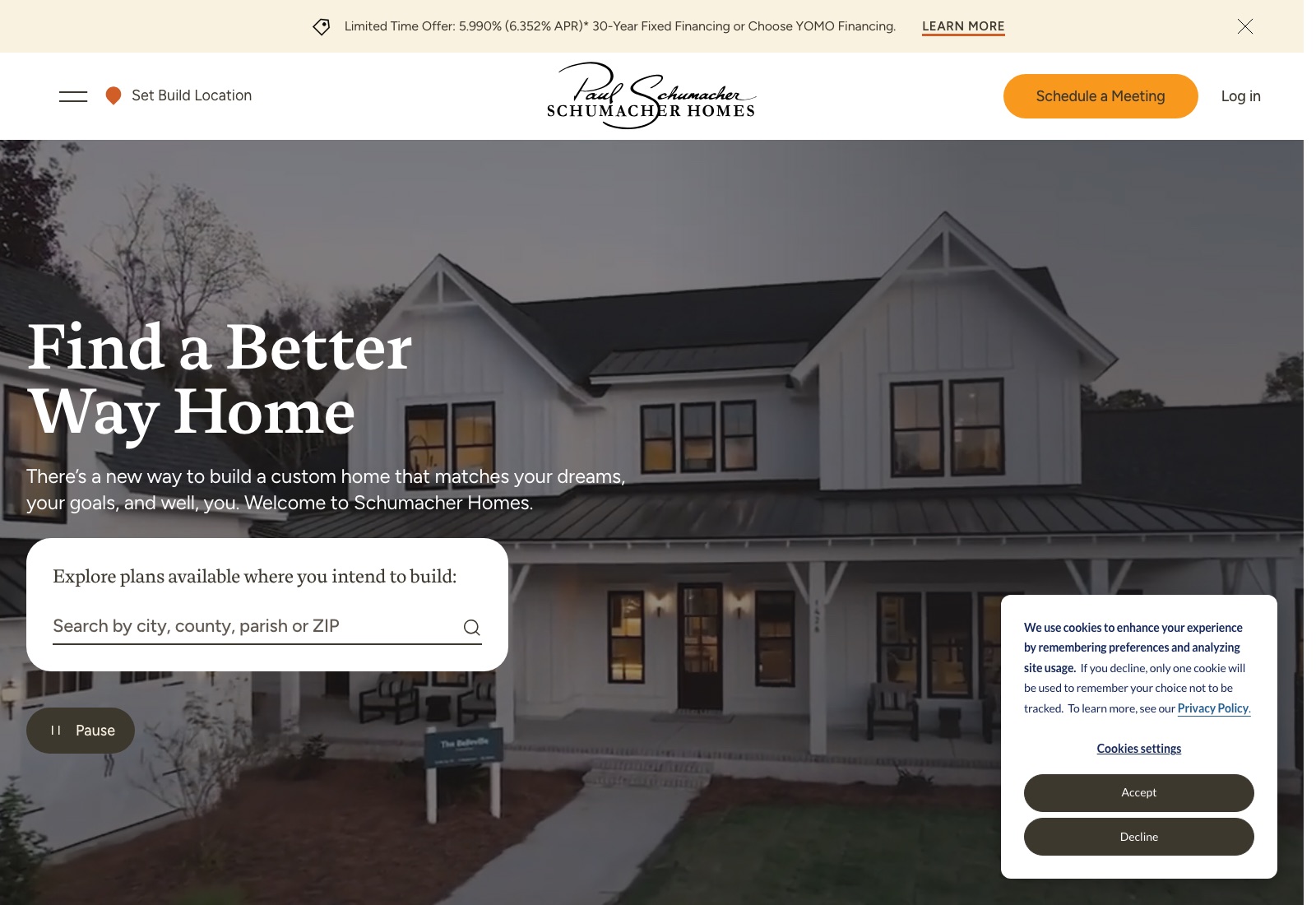
| Schumacher Homes (on-your-lot, 30-plus markets) | Yes, plan search by city or ZIP | Yes, 5.990 percent 30-year financing offer in the header | "Schedule a Meeting," "Set Build Location," plan search | Yes | Hero is JavaScript; text thin to fetchers | Model homes, reviews linked |
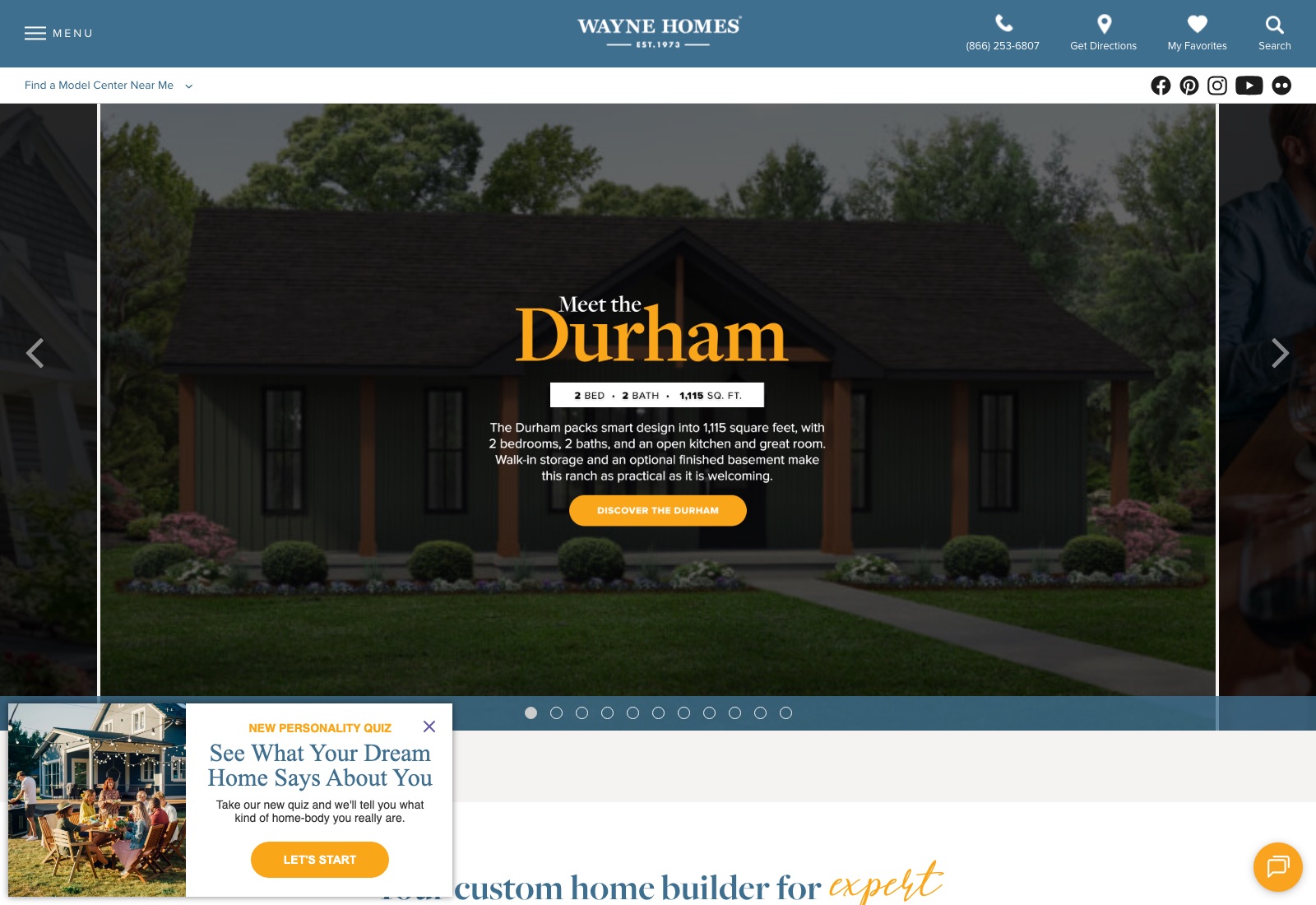
| Wayne Homes (on-your-lot, OH, PA, WV, MI) | Yes, five featured plans with beds, baths, garage and square feet | No figures; links to a "best priced homes" post | Model-center finder, appointment form, chat, favorites, a personality quiz | Yes, build process and timeline page | Yes, but body links point at a staging domain | BBB seal, reviews linked |
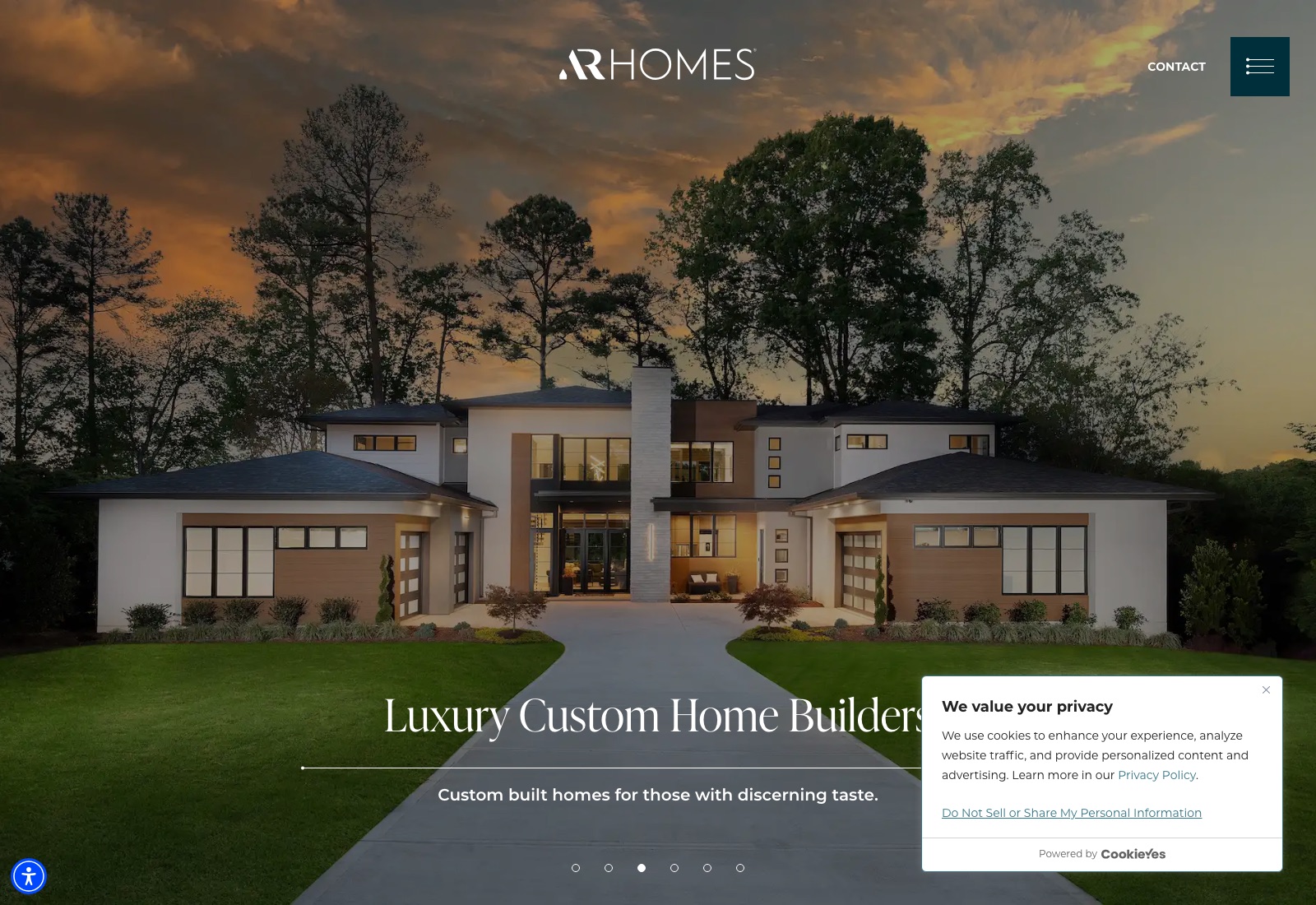
| AR Homes (luxury, franchise) | Yes, "hundreds" of plans and named available homes | None; disclaimer says to check with the local builder | "Available Homes," "Explore Plans," model tours seven days a week | Yes | Yes | One testimonial |
| Alair Homes (custom, franchise) | Portfolio only, no numbers | None | None above the fold; "Local Builders" menu | Not on the homepage | Blocked our fetch with a 403; renders in a browser | Portfolio |
| Highmark Builders (Minneapolis custom and remodel) | Named projects, galleries by room | None | "Contact Us," phone, email; two communities listed | No | Yes, with placeholder "#" menu links | Remodeler of the Year 2025 banner |
| John Kraemer & Sons (Minneapolis luxury) | Portfolio menu, no numbers on the homepage | None | None; no phone, no button, "Contact Us" in the nav | No | Yes, but the homepage is a photo and a menu | "Minnesota's only five-time Builder of the Year" |
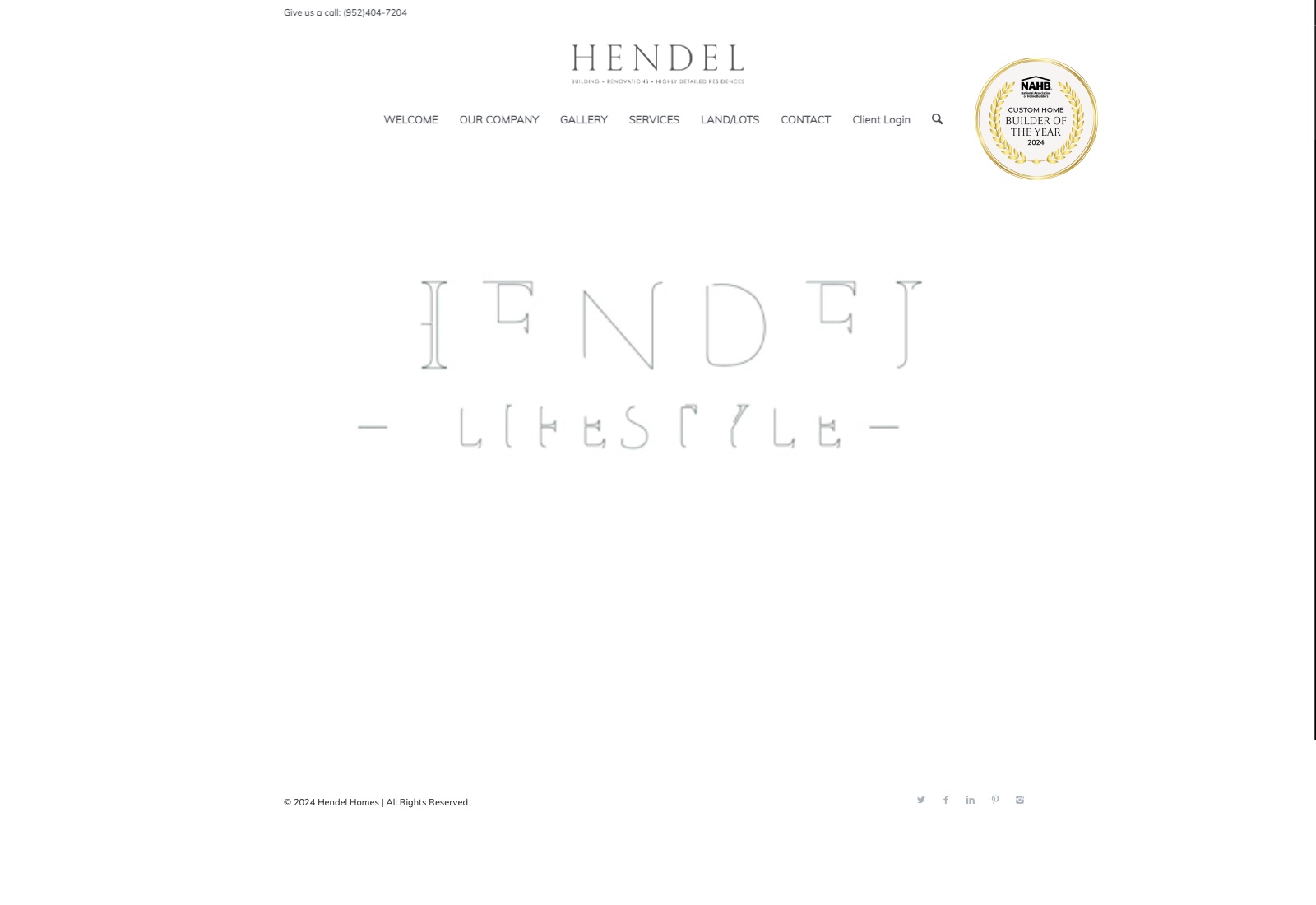
| Hendel Homes (Minneapolis custom) | Gallery linked | None | Phone number in the header | "Our Process" in the menu | No; the hero is an animation that renders blank without JavaScript | NAHB Custom Home Builder of the Year 2024 badge |
| Verdict | The two on-your-lot builders do the most because they sell plans with numbers; the four custom shops sell photographs and a phone number. Three of seven have no next step above the fold, and the award-winning Minneapolis sites are the thinnest. Custom builders are leaving the easiest wins on the table: a price range, a process page and one button. | |||||
What the best ones do
Schumacher Homes is the model for a production or on-your-lot builder. The header carries a financing offer with the rate printed, 5.990 percent on a 30-year fixed, which is a price signal that costs nothing to publish and answers the first question a buyer has. The hero asks for the city, county, parish or ZIP where you intend to build and returns the plans available there, which is a next step and a qualifier at once. The orange "Schedule a Meeting" button is the only strong color on the page. The one weakness is that the hero and the plan search are JavaScript, so a fetcher without a browser sees a thin page; Google renders it, but AI assistants doing quick fetches may not.
Wayne Homes puts a plan in the hero with the numbers on it, "Meet the Durham, 2 bed, 2 bath, 1,115 square feet," and a model-center finder, a phone number, a favorites list and a chat widget in the header. That is the right idea executed with too much on the page: a "new personality quiz" popup covers the lower left, the navigation repeats itself, and several body links point at a staging domain, which is the kind of thing a buyer never notices and Google does. The build process and timeline page is the best process page of the seven.
AR Homes shows what a luxury site can do without printing a price: "Available Homes" and "Explore Plans" as the two buttons, plans you can browse by the hundreds and request customizations on, and model tours seven days a week. The hero is a full-bleed photo with the headline and one line of copy, and a cookie banner covering the corner. What it lacks is any price signal at all; the disclaimer says to check with the local builder, which pushes the first question to a phone call.
What the custom builders get wrong
The three Minneapolis sites have the best credentials on the list and the thinnest pages. Highmark Builders has a clean hero, "Built for your vision. Crafted for your lifestyle," a Remodeler of the Year banner and galleries by room, and no price signal, no process page and no button above the fold; several menu items link to "#." John Kraemer & Sons, Minnesota's only five-time Builder of the Year, opens on an aerial photograph of a lakeside estate with a menu and nothing else: no headline, no phone, no button. Hendel Homes, NAHB's Custom Home Builder of the Year for 2024, has a hero animation that renders as an empty outline to anything without JavaScript, a phone number, and a footer that still says 2024.
None of this is a design problem. These are beautiful sites. It is an information problem: a buyer eight months from signing wants to know what you build, roughly what it costs, how the process works and what happens if they click, and the luxury convention of withholding all four in favor of photography pushes every question to a phone call the buyer is not ready to make. The fix for a custom builder is a price range ("most of our homes are $900,000 to $2.5 million"), a process page with a timeline, named projects with square footage, and one button that leads to a short form or a calendar.
Want the six things on your site in 30 days?
Fifteen minutes on what you build, your price range and your current site, and we will tell you which of the six is costing you meetings and what a rebuild should cost. No pitch deck.
What a home builder website costs
| Option | Published price (Oct 15, 2026) | What you get | What you do not get |
|---|---|---|---|
| Skill Mammoth Core (ours) | $3,000 one time, or $150 a month for 24 months | Up to 10 service or plan pages and 15 area pages, an instant lead funnel, chatbot, lead alerts, call tracking, technical SEO, owned outright | A plan catalog with hundreds of entries (that is the Pro tier at $8,000) |
| Built-Right Digital, stand-alone website | Professional Basic $5,750, Optimized Standard $9,590, Elite Custom $14,390 one time | Template-based to fully custom; the top tier adds CRM integration and a custom conversion strategy | Marketing, unless you buy the $1,499-and-up full-service tiers |
| Hook Agency | Standard $12,000 or custom $24,000, split over 12 months; up to $50,000 | A contractor-specialist team and a large content operation | Builder-specific tooling such as plan or lot feeds |
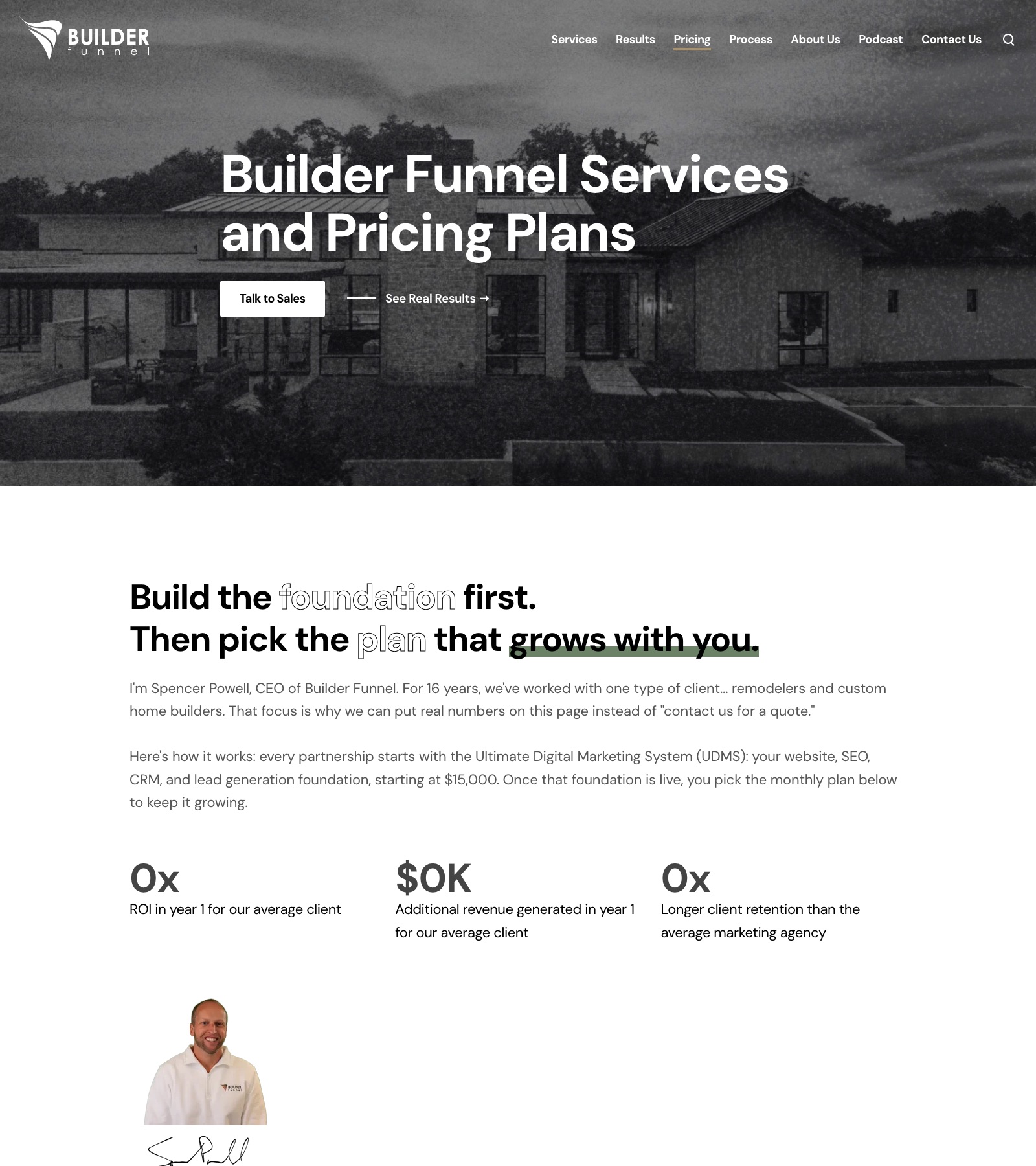
| Builder Funnel | $15,000 foundation (or $5,000 a quarter), $25,500 with a filming trip; retainers $3,500 to $7,500 a month | Website, SEO setup, CRM, tracking and a marketing plan in one package, for builders and remodelers only | A standalone website price; the site only comes inside the foundation |
| Blue Tangerine | Quote | Builder-only: listing feeds, interactive site plans with lot availability, sales-office kiosks; clients include Highland Homes and GHO Homes | A published number |
| DIY builder (Squarespace, Wix) | $19 to $99 a month | A template and hosting | Plan search, lot tools, lead routing, and your evenings |
| Verdict | A custom builder with a dozen projects needs $3,000 to $10,000 of site and the six things above. A production builder with communities, lot maps and plan feeds needs the builder-specialist stack, and should expect five figures. | ||
Two things decide which band you are in. The first is whether you sell plans or projects. A production or on-your-lot builder needs plan pages with beds, baths and square feet, a search by location, and often a listing feed to Zillow and the home-search sites, which is Blue Tangerine's specialty and the reason it quotes. A custom builder needs a dozen project pages with real numbers, a process page and a price range, which a $3,000 to $10,000 build covers. The second is whether the site has to capture a lead before the meeting. For builders that is a short qualifying form or a calendar, not a form that asks for a lot address on the first visit, and the contractor website cost guide covers what each tier of lead capture buys. The redesign cost guide has the year-two math if you are replacing a site rather than starting one.
Frequently asked questions
What should a home builder website include?
Plans or projects with numbers on them (beds, baths, square feet, or a price range for custom work), a visible price signal, a next step that is not "contact us" such as a plan search or a schedule-a-meeting button, a process page with a timeline, proof in the form of reviews, awards and named projects, and a page that renders for crawlers without JavaScript. Of the seven sites reviewed, Schumacher Homes does the most of the six.
How much does a home builder website cost?
Published prices on October 15, 2026: Skill Mammoth $3,000 (Core) or $8,000 (Pro); Built-Right Digital $5,750, $9,590 or $14,390 one time; Hook Agency $12,000 or $24,000; Builder Funnel $15,000 as part of a website-plus-marketing foundation; Blue Tangerine and the other builder-specialist shops quote. DIY builders run $19 to $99 a month plus your time.
Should a custom home builder put prices on the website?
A range, yes. "Most of our homes are $900,000 to $2.5 million" qualifies visitors, answers the first question a buyer has, and costs nothing. Of the seven sites reviewed, only Schumacher publishes any price signal, and it is a financing rate rather than a home price. Withholding every number pushes the first question to a phone call the buyer is not ready to make.
Why does my builder website not rank?
The common causes on the seven sites reviewed: a hero that only renders with JavaScript (Hendel), body links pointing at a staging domain (Wayne), placeholder "#" menu links (Highmark), and homepages that are a photograph and a menu with no text for Google to read (John Kraemer & Sons). Fix the crawl problems first, then add the plan and project pages with numbers, then the city pages for the areas you build in.
Do home builders need a plan catalog on the site?
Production and on-your-lot builders do, with a search by location and the numbers on every plan. Custom builders do not; a dozen project pages with square footage, a price range and a process page do the same job for a buyer deciding whether to call.
Does Skill Mammoth build home builder websites?
Yes. The Core site is $3,000 with up to 10 service or plan pages, 15 area pages, an instant lead funnel and call tracking; the Pro site is $8,000 for builders with larger catalogs. Both are owned outright. The contractor web design page shows the work, and the construction marketing agencies list covers the firms that compete with us for it.
See which of the six your site is missing, free.
Send us your website. The 10-minute audit grades it on the six things above and shows where meetings leak, within 48 hours.