TL;DR
Law firm SEO is local SEO with two complications: the searches split by practice area far more sharply than in other industries, and your advertising is regulated by your state bar. For the paid side, the Google Ads for lawyers guide has 2026 click prices by practice area and the 17 lawyer categories in Local Services Ads. If you are hiring the organic side out, the law firm SEO companies list has the published prices and minimums for nine of them.
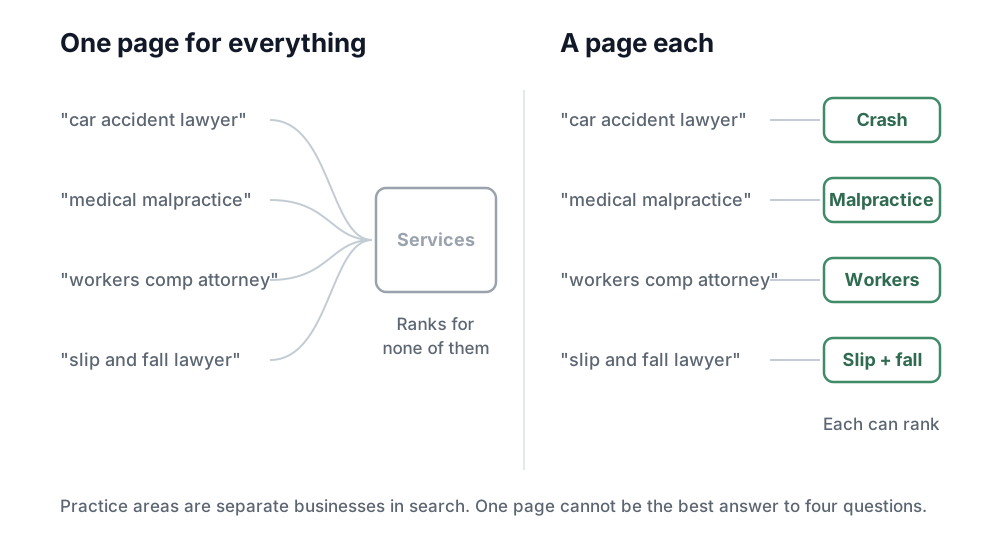
The structural rule that decides most outcomes: one page per practice area, per location you genuinely serve. Someone searching after a car crash and someone searching for a medical malpractice attorney are different people with different fears. A single combined services page competes for both and ranks for neither.
The most common waste is the opposite failure. Dozens of near-identical city pages with the name swapped, which do not rank individually and can weigh on the site as a whole.
Why legal search is different
Three things set it apart from a trade like plumbing.
Intent is fractured by practice area. A plumber sells plumbing. A firm might handle personal injury, family, criminal defense and estate planning, and those are four separate businesses as far as search is concerned, with different competitors in each.
The map pack dominates the local searches. For "personal injury lawyer near me," three map results sit above every organic listing. Ranking first organically and nowhere in the map pack means being fourth at best.
Your advertising is regulated. State bars govern attorney advertising, including claims of specialization, testimonials and required disclaimers, and the rules vary by state. Most SEO advice written for other industries ignores this entirely, and some of it, particularly around superlatives and outcome claims, will get you in trouble.
The page structure that actually ranks
Build it in this order.
- One page per practice area. Not a services page with four sections. A real page for car accidents, another for workers' compensation, another for medical malpractice. Each with its own substance, its own FAQ and its own call to action.
- Practice area crossed with location, only where you genuinely serve. If you have an office in St Paul and take cases there, a St Paul page for your main practice area earns its place. If you have never taken a case in a suburb, a page claiming you serve it is the thin-page problem in the making.
- Attorney bio pages. People search lawyers by name after a referral, and the bio is often the first impression. These rank easily for name searches and convert well.
- Case results, with the disclaimers your bar requires.
- Question pages. Filing deadlines, what a case is worth, whether a lawyer is needed for a minor accident. These match real searches and demonstrate competence.
The test for whether a location page should exist: could you write 400 words about this specific place that would be wrong if you pasted them onto another city's page? Local courts, filing specifics, roads where crashes cluster, the county's process. If everything you can write would be equally true of anywhere, do not build the page. A single strong page beats twenty thin ones, and the thin ones can drag the strong one down with them.
The map pack, which is most of the prize
For local legal searches, the Google Business Profile does more work than the website. Three things drive it.
Categories. Your primary category should be your primary practice area, not the generic "law firm." A personal injury firm listed as "Personal injury attorney" outranks the same firm listed as "Attorney" for the searches that matter.
Reviews, steadily. Volume and recency both count, and legal buyers read them more carefully than in most industries because the stakes are higher. Within your bar's rules, ask every resolved client. Steady beats spiky, since bursts attract filters.
Consistency. Your name, address and phone should match everywhere they appear. Multi-office firms get this wrong constantly, and duplicate or conflicting listings are a common cause of suspension. If yours has gone dark, the reinstatement guide covers the appeal order, which matters more than most firms realize.
To see where you actually rank across your service area rather than from your own desk, local map grid ranking explains the measurement.
What to skip
- Mass-produced city pages. The single most common legal SEO waste. Twenty pages with a swapped city name rank for nothing and dilute the site.
- Paid legal directories beyond the main two or three. Most sell you a profile that ranks for your own firm name, which you would rank for anyway.
- Superlatives in title tags. "Best," "top," "premier" are unverifiable, frequently restricted by bar rules, and carry no ranking weight.
- Chasing head terms first. "Personal injury lawyer" nationally is a fight against firms with budgets you cannot match. "Motorcycle accident lawyer" plus your city is winnable and the traffic is better qualified.
- Firm news posts. Nobody searches for them. Answer client questions instead.
Want to know which practice areas you could actually win?
We will map what you currently rank for, where the map pack gaps are in your metro, and which practice area is the realistic first target. Written report, no obligation.
Technical basics that matter here
Nothing exotic, but legal sites fail these often because they are frequently built from heavy templates.
- Speed on mobile. Many legal searches happen on a phone, sometimes from a hospital. Heavy sliders and autoplaying video are the usual culprits.
- A separate title and description per page. Template builds routinely ship the firm name as the title of every page.
- Schema for the organization and for FAQs. Legal service markup and FAQ markup are both well supported.
- Working intake on mobile. Test your own form on a phone. In our review of five firm sites, two had chat widgets covering the intake form on load.
What to expect, honestly
Legal is among the most competitive verticals in search because case values justify enormous budgets. A new practice area page in a major metro is not ranking in six weeks.
Realistic: profile and review work shows movement in weeks. Practice area pages in a competitive metro take months, and often longer in personal injury specifically. The firms that succeed pick one practice area and one geography, win it, then extend. The ones that fail publish forty pages across every service and city at once and rank for none of them.
Meanwhile, intake improvements pay back immediately and improve every channel at once, which is why how to get law firm clients puts them first.
Related reading
- Five law firm websites reviewed
- How to get law firm clients, intake first
- If your profile gets suspended
- Local map grid ranking
- Law firm marketing, how we work with firms
Frequently asked questions
How long does law firm SEO take?
Google Business Profile and review work can move within weeks. Practice area pages in a competitive metro generally take several months, and personal injury in a major city can take longer still. Firms that pick one practice area and one geography see results far sooner than firms publishing across every service and suburb at once.
Should a law firm have a page for every city it serves?
Only for places you genuinely serve and can write specifically about, such as local court processes or the roads where crashes cluster. If the content would be equally true anywhere, the page will not rank and a pile of such pages can weigh on the whole site.
What is the most important ranking factor for law firms?
For local searches, the Google Business Profile and its reviews usually outweigh the website, because the map pack sits above organic results. For question-based searches, it is having a specific page that answers that specific question.
Do law firms need separate pages for each practice area?
Yes. Practice areas are effectively separate businesses in search, with different competitors and different searchers. One combined services page competes across all of them and typically ranks for none.
Are there advertising rules that affect law firm SEO?
Yes. State bars regulate attorney advertising, including claims of specialization, testimonials and required disclaimers, and rules vary by state. Superlatives such as "best" and anything resembling a guaranteed outcome are the common trouble spots. Check your own jurisdiction before publishing.
Is legal SEO more expensive than other industries?
Yes, because case values justify large budgets and the competition is well funded. That also means the return can be high, and it makes wasted spend expensive. Sequencing matters more here than in most verticals.
What should a law firm's primary Google category be?
The specific practice area you most want cases in, such as "Personal injury attorney," rather than the generic "Law firm" or "Attorney." The primary category has outsized influence on which searches you appear for.