TL;DR (answer-first)
Roofing leads come from four sources worth your time: the Google map pack driven by your Business Profile and reviews, service and city pages that match what homeowners actually search, referrals you ask for on purpose, and a storm response system prepared before the weather hits. Local Service Ads and shared leads fill gaps, but they reset to zero the month you stop paying.
Roofing leads are also among the most expensive in the trades. Advertisers pay roughly $43 per click on "roofing leads" and $47 on "how to get roofing leads." That is what your competitors think a roofing customer is worth, and it is the price of renting demand. This page is about the alternative.
Want this built for your market? See roofing marketing or book a free strategy call.
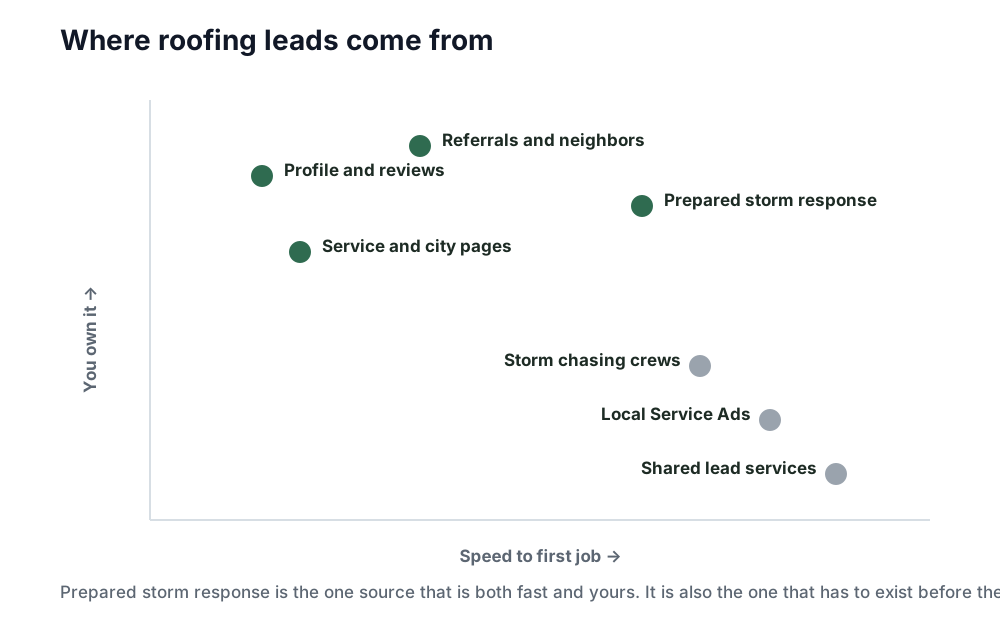
Roofing is high-ticket and high-competition, which makes lead generation both more important and more expensive than in most home services. A single replacement is worth thousands, so every competitor is fighting for the same homeowners and the shared-lead services know it. The way to win is to build sources you own, so you are not renting every job at a premium.
Eleven ways to get roofing leads follow, ordered by return on effort. Roofing has a couple of sources the other trades do not, so start there.
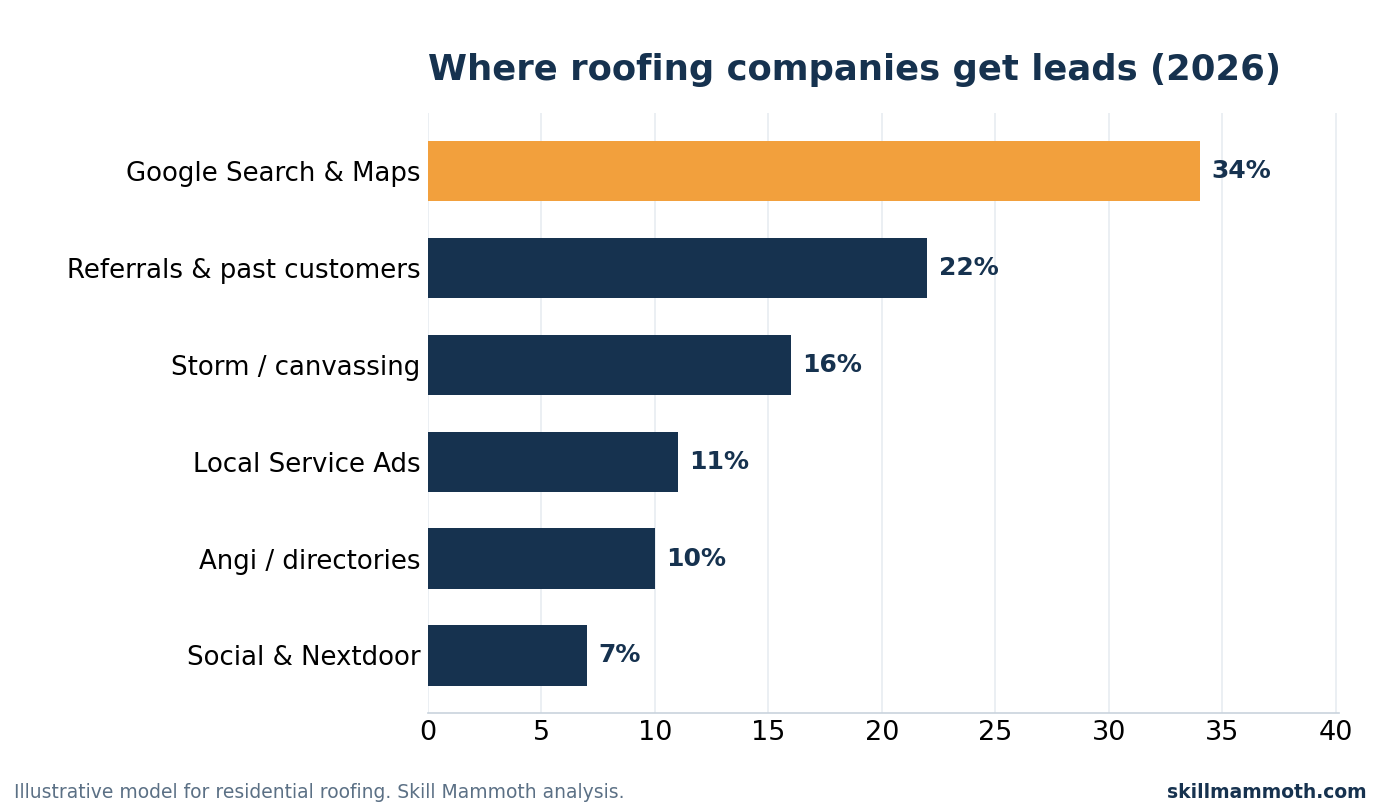
Google and referrals lead, but storm response and canvassing play a bigger role in roofing than in any other trade. A smart roofing company builds the evergreen Google channels and layers storm response on top when the weather creates demand.
1. Own your Google Business Profile
The map pack is where most roofing searches start. Claim and fully complete your profile, choose accurate categories (Roofing contractor, Roofer), add real photos of completed roofs, and keep it current. It is free and it is the foundation everything else builds on.
2. Make reviews a relentless habit
In a trade this competitive, review count and recency often decide who wins the map pack. Ask every homeowner at the moment the new roof is done and they are thrilled, send a direct review link by text, and reply to every one. This is exactly the kind of work that moved M&T Roofing to double their leads month-over-month: consistent local-search fundamentals, done properly.
3. Build a page for every roofing service and city
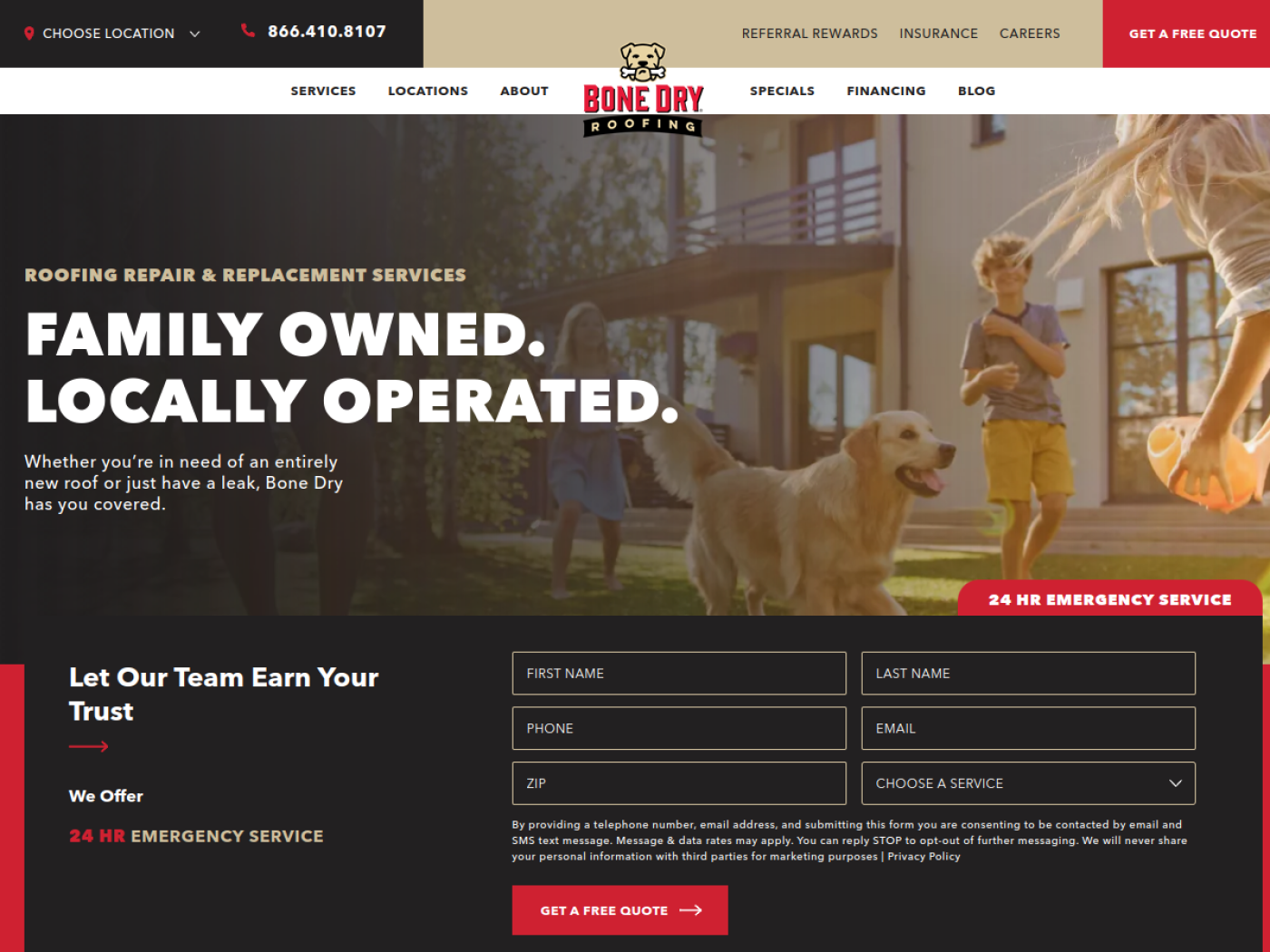
Homeowners search "roof replacement," "roof repair," "storm damage roof," and "metal roof installation," each in their own town. Build a dedicated page for each core service and each city you cover, so you can rank for the specific searches instead of one generic "roofing" page. Here is a clean example of a roofing site built around clear services and a fast quote request.
4. Turn on Local Service Ads
Local Service Ads place the Google Verified badge above everything else and charge per lead, not per click. Roofing leads are not cheap here, but for a trade where one job is worth thousands, being at the very top when someone searches "roofer near me" is often worth it, especially to fill the calendar while your organic pages mature.
5. Have a real storm response plan
Storms create a flood of urgent demand, and the roofers who capture it are the ones ready before the wind stops. Have a landing page for storm and hail damage, make sure your Local Service Ads and Google Business Profile are live in the affected area, and be ready to respond fast. This is roofing's unique lead spike, and preparation is everything.
6. Respond in minutes, not hours
Roofing leads shop hard, and the first company to respond usually wins the inspection. Speed to lead is a decisive advantage.
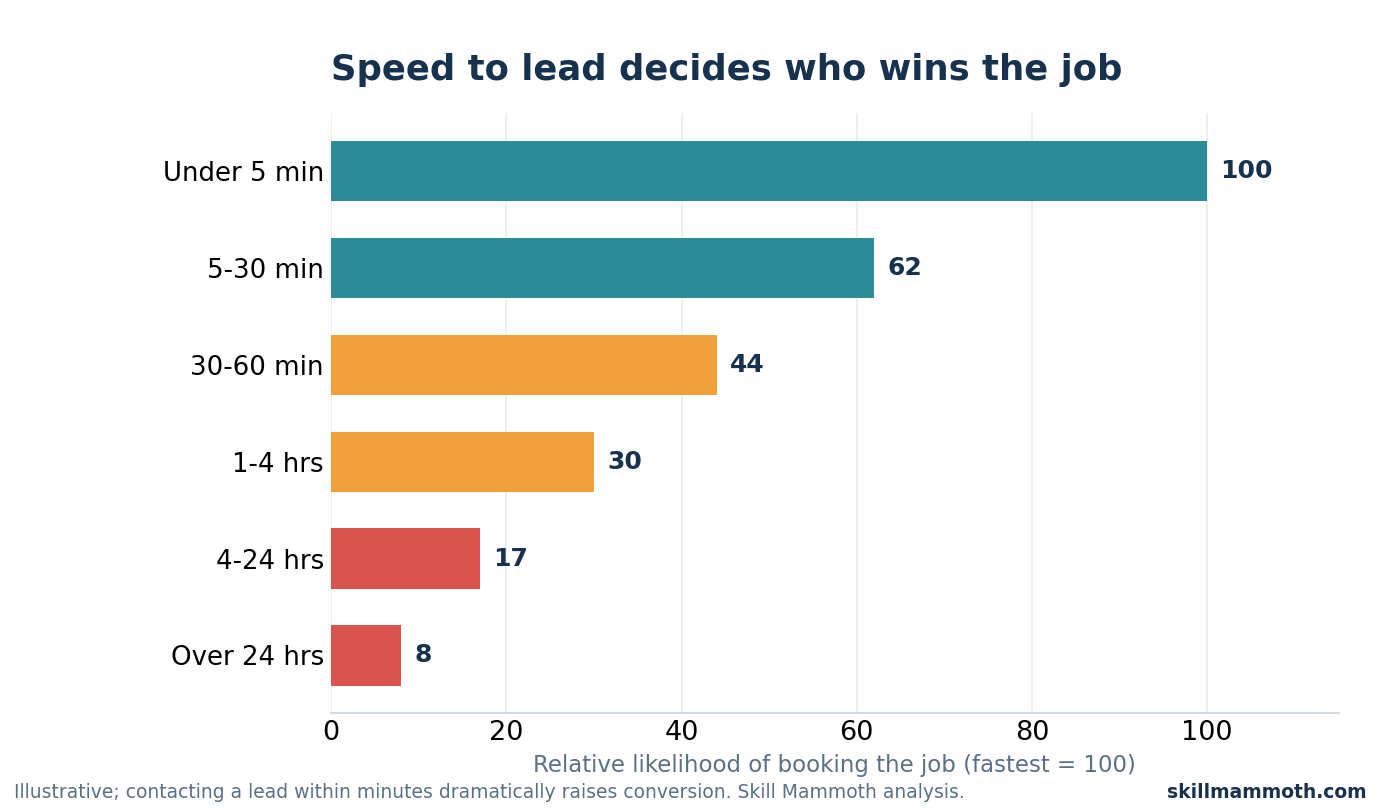
A lead you contact within five minutes is dramatically more likely to book than one you reach hours later. A field-service CRM that texts leads back instantly closes this gap. Many of our clients use Jobber to automate instant follow-up and keep their pipeline organized. (Disclosure: Skill Mammoth is a Jobber partner and may earn a commission.)
7. Systematize referrals and neighbor marketing
A new roof is visible to the whole street. Use that: a yard sign during the job, a knock on the neighbors' doors, and a referral offer for the customer. Roofing referrals convert exceptionally well because a neighbor can literally see your work.
8. Answer the money questions in content
Write "how much does a new roof cost," "signs you need a roof replacement," "does insurance cover roof damage." These capture homeowners in the research phase and get you cited by AI search tools. The insurance-question content in particular pulls in high-intent storm-season traffic.
9. Show your work on social
Before-and-after roof photos and short drone clips of finished jobs build trust and give the algorithm something to show. You do not need production value, just real, clear proof of quality work.
10. Keep listings consistent everywhere
Your name, address, and phone should match across Google, Yelp, Angi, BBB, and Nextdoor. Consistent citations reinforce that you are a real, established local roofer and quietly support your ranking.
11. Lean on owned channels to control cost per lead
Roofing has some of the most expensive purchased leads in home services, which makes owning your channels even more valuable.
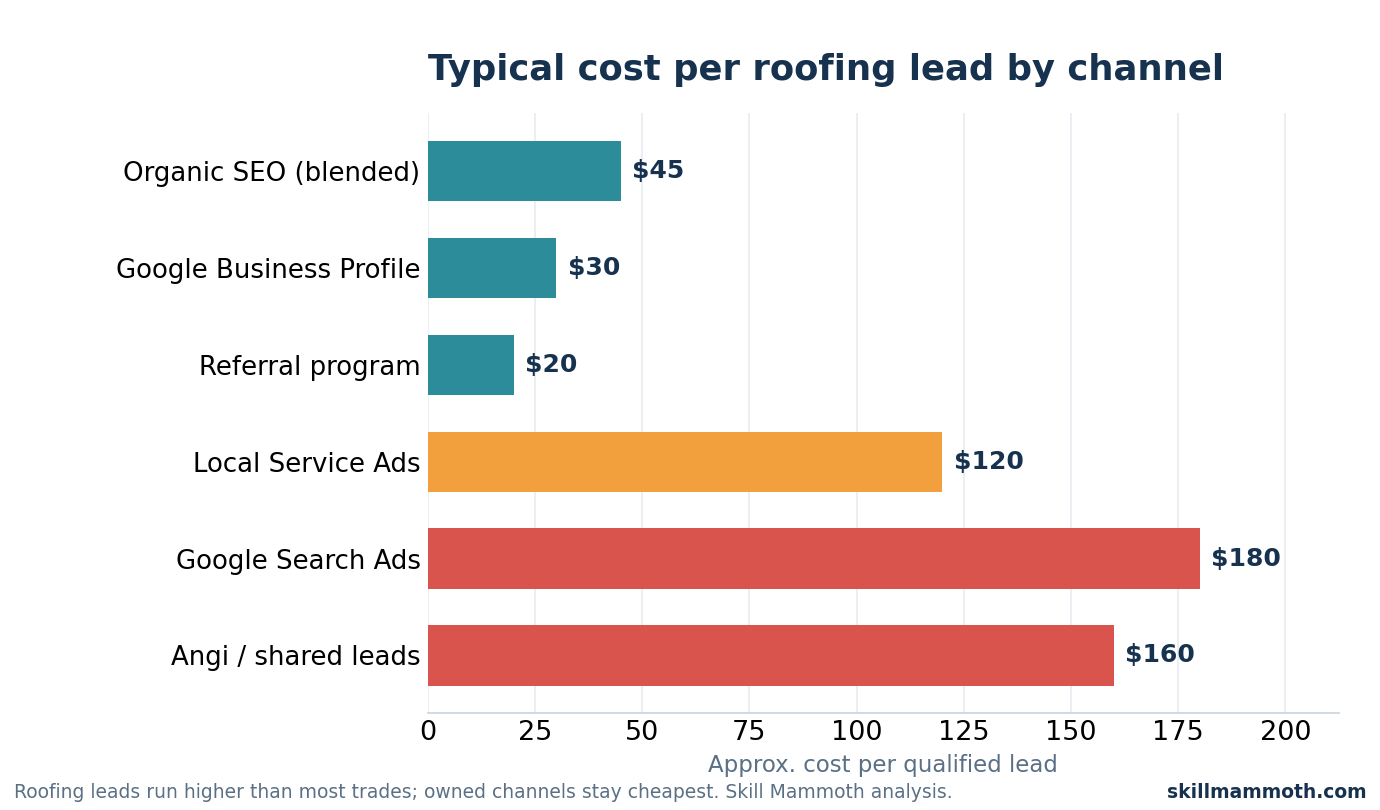
Shared leads and search ads sit at the high end and reset to zero every month. Organic search, your Google Business Profile, and a referral program carry the lowest cost per lead and compound over time. Use paid to fill gaps and during storms, but build the owned engine that lowers your cost per roof for years. For the full tactical list, see roofing marketing ideas, and for the same playbook in another trade, how to get HVAC leads.
FAQ
What is the best source of roofing leads?
For most roofers, the Google map pack (driven by your Business Profile and reviews) delivers the best combination of volume, intent, and cost. Storm response and referrals layer powerfully on top.
How much do roofing leads cost?
Roofing has some of the most expensive leads in home services. Shared leads and search-ad leads often run well over $100 each, while blended organic and Google Business Profile leads cost far less and keep dropping as those channels mature.
Are shared roofing leads from Angi worth it?
They can fill your calendar, but you pay a premium per lead and share it with competitors, so the cost per booked roof is high. Best used to supplement, not replace, owned channels.
How do roofers get leads after a storm?
The roofers who capture storm demand prepare in advance: a storm-damage landing page, active Local Service Ads and Google Business Profile in the area, and a fast response system so they reach homeowners before competitors do.
Want a roofing lead plan built for your market?
Book a free strategy call. We helped M&T Roofing double their leads month-over-month, and we work with 40-plus home-service companies.