TL;DR
Nine channels, ranked by what they actually cost per booked job rather than per lead. The ranking barely changes by trade, though the numbers do.
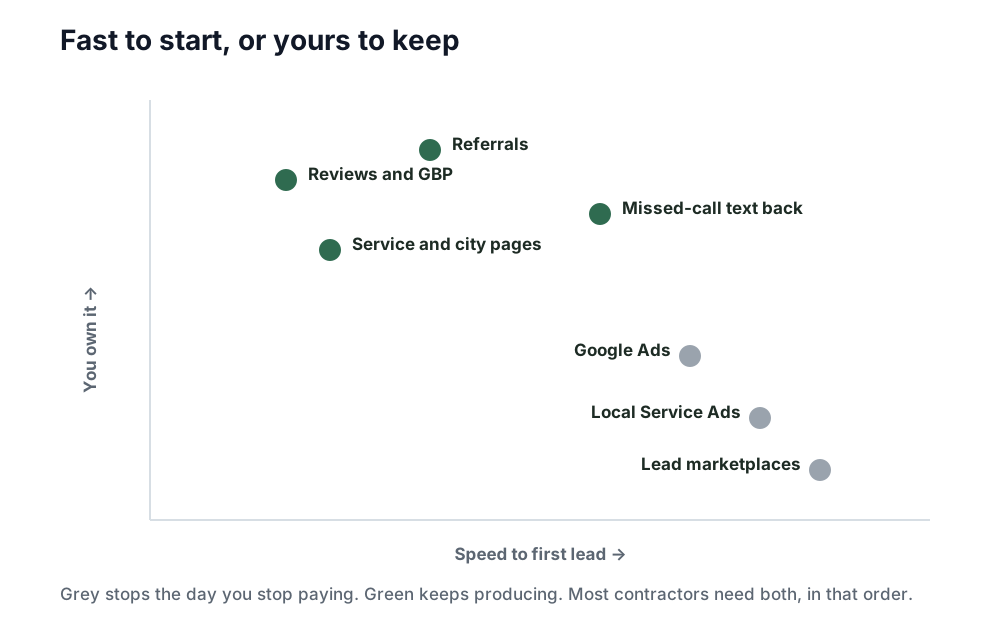
Google Business Profile is first because it is free and it is where a homeowner with an urgent problem looks. Local Service Ads are second because you pay per lead and can start this week. Local SEO is third because it compounds. Everything after that is situational, and three channels are worth skipping outright.
Before any of it: work out your current close rate. If 100 leads produce 18 jobs, more leads is the expensive way to grow.
The short version
Cost per lead is the number agencies report. Cost per booked job is the number that pays you, and the gap between them is your response time.
Not sure where your leads are leaking? The free website audit walks your lead paths and what happens after someone submits. Report inside 48 hours.
Do this arithmetic first
Every channel below multiplies your existing close rate. That makes the close rate the number with the most riding on it.
If 100 leads currently produce 18 jobs, doubling your lead volume gets 36 jobs at double the cost. Lifting the close rate to 30% gets 30 jobs on leads you have already paid for. One of those needs a budget increase and the other needs a phone that answers faster.
Harvard Business Review audited 2,241 US companies and found the average first response to a web lead took 42 hours, with 23% never responding at all. A 2021 study of 5.7 million inbound leads found conversion 8x higher inside five minutes than at six or later. Run your own numbers in the contractor funnel calculator before you spend anything.
higher conversion responding inside five minutes, across 5.7 million tracked leads
The nine channels, ranked
1. Google Business Profile
Free, and it is the first thing a homeowner sees when they search with intent to hire today. Complete every field, list each service separately, refresh photos monthly, post weekly.
Reviews are the compounding part: target 50 in year one and keep a steady rate. Velocity signals more than a large stale total. The sequence is in our 100 Google reviews playbook. If you have duplicate listings, resolve them first, because they split your reviews and your ranking signal.
Cost per lead: effectively zero after setup. Nothing else on this list competes with that.
2. Google Local Service Ads
Pay per lead rather than per click, with the Google Verified badge attached. Live within days of approval, which makes it the fastest way to fill a thin schedule.
| Trade | Cost per lead |
|---|---|
| Lawn care | $10 to $40 |
| Pest control | $15 to $50 |
| Electrical | $20 to $65 |
| Plumbing | $20 to $70 |
| HVAC | $25 to $80 |
| Roofing | $30 to $100 |
| Water damage restoration | $50 to $150 |
| Verdict | At 25 to 45% close rates, cost per acquired customer usually lands between $60 and $280. |
Dispute bad leads weekly. Active dispute management is most of the difference between a DIY account and a managed one. Full breakdown in what Local Service Ads cost and the Google Verified guide.
3. Local SEO
Slowest to start and cheapest forever after. Service pages, service-area pages that say something true about each town, and internal linking that ties the cluster together.
Expect local pack movement in 6 to 9 months in a mid-competition market. The complete method is in SEO for contractors, with trade-specific versions for plumbing, roofing, HVAC and electrical.
4. Your own website, treated as a channel
Most contractor sites are brochures. A site that gives a number instead of asking for a form converts at several times the rate.
Instant estimate tools are the biggest single upgrade when your pricing is predictable enough to quote a range. A roofing client of ours saw 2x qualified leads within 60 days of launching one, covered in the case study.
Want the channels wired to something that answers?
We build the site, the local presence, and the follow-up underneath, then report booked jobs rather than sessions.
5. Reviews as an acquisition channel
Reviews are usually filed under reputation, which undersells them. In the local pack they are a ranking input and the deciding factor between three companies a homeowner is comparing on a phone.
Automate the request by text within an hour of finishing the job, while the technician is still fresh in mind. Reply to all of them, including the bad ones.
6. Referral and reactivation
The cheapest leads you will ever contact are the ones you already paid for. Every contractor has hundreds of old estimates that never booked.
One SMS to everyone who requested a quote in the last 18 months, run quarterly rather than monthly. Response rates are low single digits, which sounds bad until you notice the cost is about a cent a message and the jobs are full price.
7. AI search visibility
Homeowners increasingly ask ChatGPT or Perplexity for a recommendation before opening Google. Being cited is a different discipline from ranking, and it is still cheap because most competitors have not started. See GEO vs SEO and getting ChatGPT to recommend you.
8. Google Ads
Works, costs more per lead than LSAs for most home service categories, and needs real management to avoid burning budget on the wrong intent. Worth it once LSAs are capped out and you still want volume.
If Google Ads is central to your plan, it deserves specialist attention, not a generalist retainer line item. That is how we run it ourselves: our PPC management is a dedicated service with its own fee, never an afterthought inside a bundle.
9. Lead marketplaces
Angi, Thumbtack and the rest. Last on the list rather than absent, because they do fill a thin schedule quickly.
The problem is structural: the same lead goes to several contractors, so you compete on response speed against three companies who bought it too, at prices that rise over time. Use it as a stopgap, not a foundation.
Timing: when to spend, by trade
Lead cost moves with demand, and so does what a lead is worth. Spending in the wrong month is one of the quieter ways contractors waste budget.
| Trade | Peak demand | When to build, when to buy |
|---|---|---|
| Roofing | After storms, plus late summer | Build SEO in the quiet months. Buy leads the week hail lands, when close rates are highest. |
| HVAC | First heat wave, first hard freeze | Cost per lead can jump 50 to 100% during a surge. Budget flexibly rather than evenly. |
| Plumbing | Winter freezes, summer sewer season | Steady spend year-round. Emergencies do not wait for a campaign. |
| Lawn care | Spring signup window | Front-load the six weeks before the season. A missed spring is a missed year. |
| Pest control | Species windows, spring through autumn | Publish pages a full season early so they rank before the window opens. |
| Verdict | Paid channels flex with the season. Organic has to be built before it. | |
The first 30 days, if you are starting from nothing
A sequence that produces leads inside a month without a website rebuild.
- Week 1. Complete the Google Business Profile. Every field, every service listed separately, twenty photos minimum. Free, and the single highest-return week available.
- Week 1. Set up missed-call text back and route form submissions to a phone as SMS. This costs $30 to $100 a month and lifts conversion on leads you already get.
- Week 2. Apply for Local Service Ads. Approval takes days to a couple of weeks depending on background checks, so start it early.
- Week 3. Turn on automated review requests by text after every completed job. Reply to everything that comes in.
- Week 4. Run one reactivation campaign to every unbooked estimate from the last 18 months.
None of that requires a new website. It is the cheapest 30 days of marketing available to a contractor, and most companies have done none of it.
Three to skip
Skip social media as a lead source. Useful for recruiting and for reminding past customers you exist. As a source of homeowners with an urgent job, search beats it every time.
Skip printed directories and mailers as a first move. They can work for established brands in dense routes. As the first thing a $700K contractor buys, the tracking is poor and the money is better spent on response systems.
Skip buying more leads before you know your close rate. This is the expensive one, and it is what most contractors do first.
What each channel actually costs, side by side
| Channel | Time to first lead | Cost per lead |
|---|---|---|
| Google Business Profile | 2 to 8 weeks | Effectively $0 |
| Local Service Ads | Days | $20 to $80 typical |
| Local SEO | 6 to 9 months | $0 per lead once ranking |
| Website conversion work | Immediate on existing traffic | Lifts every other channel |
| Reviews | Ongoing | Near $0 |
| Reactivation | Days | Cents per message |
| Google Ads | Days | Higher than LSA per lead |
| Lead marketplaces | Immediate | Shared, rising |
| Verdict | Run LSAs for volume now while the free and compounding channels mature. | |
Your trade, specifically
The ranking above holds across home services. Cost per lead and seasonality do not, so the trade-level versions go deeper on both.
- Plumbing leads: 9 channels ranked by ROI
- Roofing leads, storm season and year-round
- HVAC leads
- Electrician leads
- Lawn care leads
- Painting leads
- Pest control lead generation
Related reading
- Contractor marketing: the complete playbook, the wider picture around these channels
- Contractor lead follow-up: the 2026 system
- The contractor sales funnel and your real revenue math
- Why your business is not getting leads
The Meta channel in detail, with benchmarks against Google, is in Facebook ads for contractors.
Remodelers face a longer cycle and a bigger ticket than most trades on this list; the remodel-specific ranking is in remodeling marketing.
FAQ
What is the cheapest way for a contractor to get leads?
A fully completed Google Business Profile with steady review velocity. It costs nothing beyond the time to set up and maintain, and it is where homeowners with urgent jobs look first. Nothing else on the list competes on cost per lead.
How much do contractor leads cost?
On Google Local Service Ads, roughly $10 to $40 for lawn care, $20 to $70 for plumbing, $25 to $80 for HVAC, $30 to $100 for roofing and $50 to $150 for water damage restoration. At typical 25 to 45% close rates, cost per acquired customer lands around $60 to $280.
How fast can a contractor start getting leads?
Local Service Ads produce leads within days of approval. Google Business Profile improvements take 2 to 8 weeks. Local SEO takes 6 to 9 months in a mid-competition market. Response-time fixes improve conversion on existing leads immediately.
Are lead marketplaces like Angi worth it for contractors?
As a stopgap when the schedule is thin, they work. As a foundation they are weak, because the same lead is sold to several contractors and prices rise over time. You end up competing on callback speed, which is worth building for its own sake.
Should I fix my close rate or buy more leads?
Close rate, almost always. If 100 leads produce 18 jobs, lifting that to 30 gets you two-thirds more revenue from the same spend. More leads multiply whatever rate you already have, including a poor one.
Do contractors get leads from social media?
Rarely, in any volume that matters. Social is useful for recruiting and for staying visible to past customers. Homeowners with an urgent job search rather than scroll.
What close rate should a contractor expect?
It varies by trade and job value, but most contractors who have not built a follow-up system sit somewhere between 15 and 25% of leads becoming booked jobs. Fast response and a real cadence commonly move that into the 30s.
How many times should I follow up with a lead?
Five to seven touches over 14 days, weighted heavily toward the first hour. Most contractors stop after one or two and call the lead cold when it was never worked.
Work out which channel you actually need
Free website audit: a 10-minute Loom on your lead paths and what happens after someone submits, plus a written report in 48 hours.